Coin Die Crack or Scratch: What to Examine
Errors & varietiesBy Coinzy Editorial Team
· 3 min read
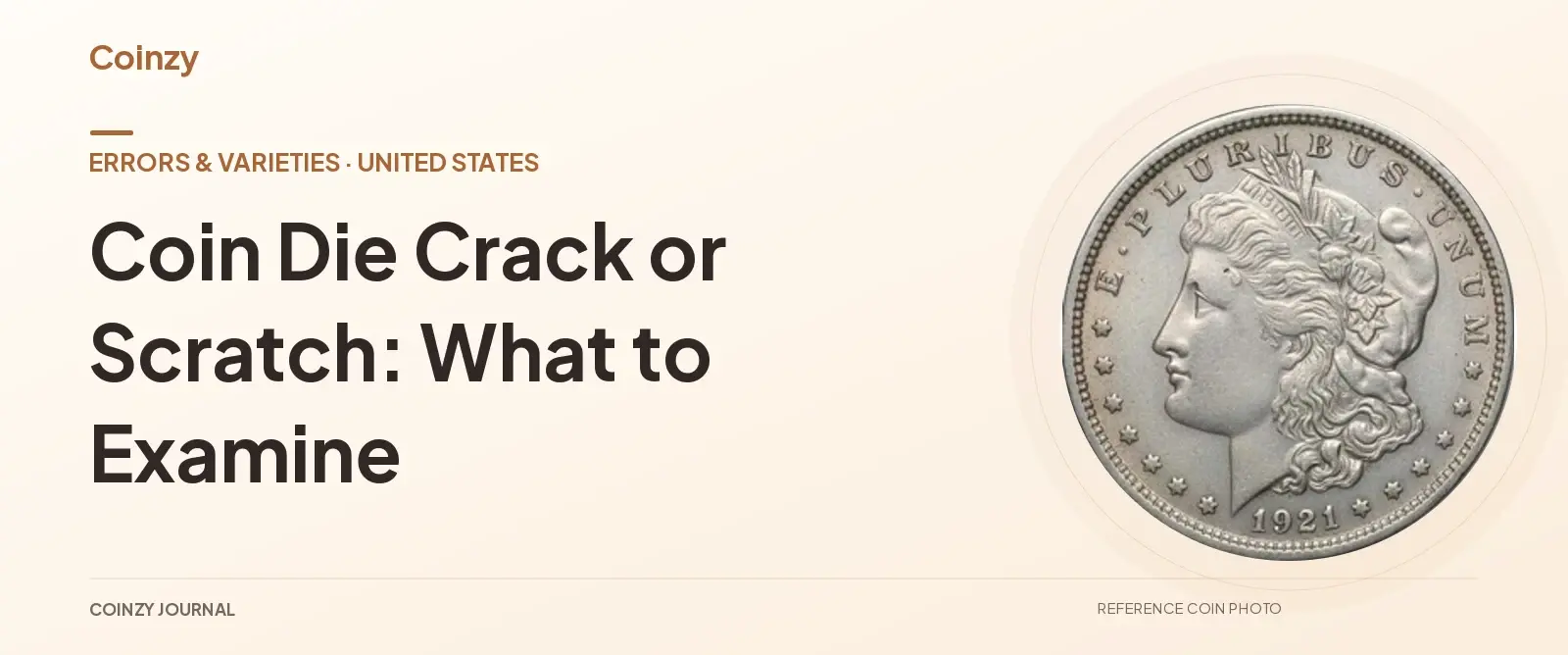
Examine whether a line is raised, incuse or associated with displaced metal before deciding that it is a die crack or scratch. The apparent shape can change under lighting, so use several views.
What should you know about examining a line on a coin?
Look at the line’s relationship to the design and rim without touching it with a tool. A die-related feature and a later surface mark arise by different processes and should not share a label without evidence.
Which evidence should you use?
A good comparison uses an attributed example from the same issue or a technical reference explaining the feature. Record where the line begins, where it ends and which elements it crosses.
NGC: Variety vs Mint ErrorWhat mistake should you avoid?
Do not scrape a line to see whether it is raised. Testing the surface this way can introduce damage while destroying the evidence you hoped to clarify.
How does this work in practice?
A line looks bright in a photograph but dark when the light moves. Better directional images may establish the relief more usefully than increasing contrast in an editor.
For examining a line on a coin, begin with a neutral observation and then test possible explanations against the photographs and reference. Write down which visible feature each explanation accounts for. If an explanation requires ignoring the reverse or edge, the evidence set may be incomplete rather than the attribution secure.
Keep an unedited photograph alongside any enlarged detail. Describe the location of the feature using nearby lettering or design elements so that another person can find it. With examining a line on a coin, a reviewer needs to see the same evidence you saw, not just the name of the error you suspect.
Ask a narrow question when requesting help: which manufacturing or damage process best explains the visible feature, and what additional view would distinguish the alternatives? An answer that identifies a missing piece of evidence can be more useful than a confident label based on an inadequate image.
What should your next steps be?
- Photograph the line under different lighting.
- Keep the full coin in at least one image.
- Describe relief only when clearly visible.
- Compare with issue-specific references.
- Leave the surface untouched during investigation.
Work through the checklist in order and keep the outcome of each step with your record of examining a line on a coin. If a step cannot be completed, state the missing information explicitly. This makes it easier to ask for the right photograph, reference or professional opinion instead of substituting a guess.
When is more evidence needed?
Use a neutral description until the feature is understood. Even a genuine die feature needs a market and attribution context before a premium can be assumed.
Frequently asked questions
Can a photograph settle the question on its own?
A photograph can help with examining a line on a coin, but its usefulness depends on the visible detail and the question being asked. Request complete views and a relevant close-up when necessary. If the outcome depends on an unseen surface, an exact measurement or physical authentication, explain that limitation and seek the appropriate assessment.
What should I keep in my collection record?
Keep the coin’s identification, the images you examined and the source behind the conclusion about examining a line on a coin. Add the transaction or assessment documents when relevant, and distinguish a confirmed fact from an opinion. Update the record when later evidence changes an important detail rather than silently replacing the original account.
How should you use a professional opinion?
Ask the reviewer to explain the scope of the answer about examining a line on a coin: what evidence was examined, which conclusion it supports and which questions remain open. Keep that explanation with the original record. A useful opinion should help you choose a next action, such as obtaining a clearer image, checking a reference or arranging physical examination; it should not require you to ignore information that conflicts with the conclusion.
Where can you continue your research?
Browse the Coinzy catalogueRead more collecting guidesUnderstand the Sheldon grading scaleU.S. Mint: Caring for Your Coin CollectionCoinzy Editorial Team
Coinzy publishes practical coin collecting, identification and marketplace guides with links to the references used. Coin-specific authenticity and grading questions may require an independent expert assessment.