Coin Trading Do’s and Don’ts for Collectors
TradingBy Coinzy Editorial Team
· 3 min read
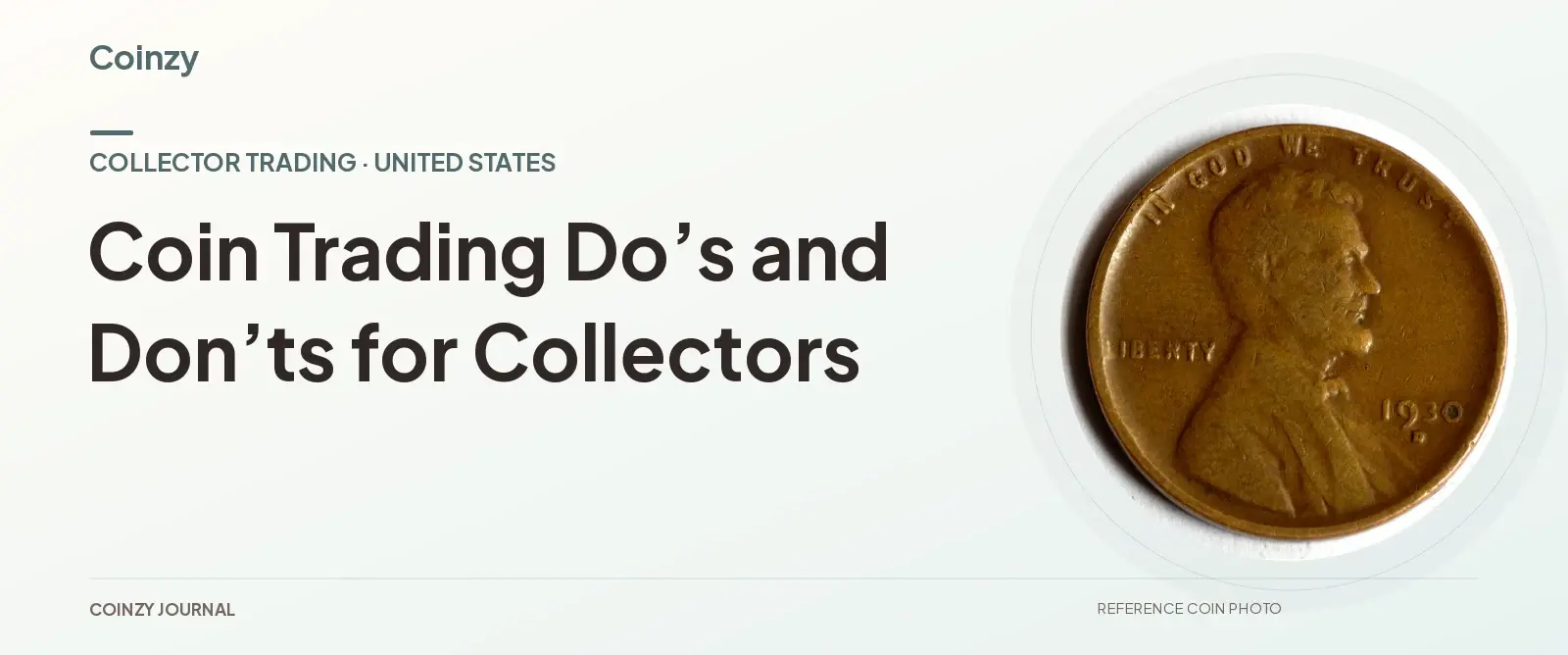
Thumbnail: Wheat cent 1930 (2).jpg by Doronenko. CC BY 3.0. Cropped, resized and composed with title and background.
Good coin-trading habits combine accurate descriptions, independent checks and a clear agreement. Enthusiasm for an incoming coin should not erase the practical details of the exchange.
What should you know about setting good coin-trading habits?
Describe what you know and what remains uncertain. Show visible defects and retain the photographs that the other collector used to make the decision.
Which evidence should you use?
Compare attributions and relevant sale evidence before agreeing on any cash adjustment. Record which documents, holders or original packaging are included.
U.S. Mint: Get Started Collecting CoinsWhat mistake should you avoid?
Do not promise a grade that has not been professionally assigned or hide a cleaning concern because the other collector did not ask. A durable agreement depends on the same understanding of the coin.
How does this work in practice?
A trader proposes changing one coin after an agreement has been reached. Treat the substitution as a new offer requiring identification and inspection rather than as an insignificant detail.
Before setting good coin-trading habits, make sure both participants can identify the same items from the agreement. Include holders, documents and any additional payment in that description. A misunderstanding over a small qualification can matter more than an apparent difference between the parties’ preferred trade values.
Keep preference and evidence separate while discussing the exchange. You can knowingly choose an item because it fits your collection, but that preference should not be presented as proof of market value. For setting good coin-trading habits, an informed personal choice is clearer than a claim that every participant must value the material identically.
Agree what happens if inspection reveals a discrepancy before possession changes. Specify how the issue will be documented and how the parties will communicate. This does not guarantee a dispute-free exchange, but it creates a shared starting point that is more useful than assumptions made after a package arrives.
What should your next steps be?
- Do describe every item specifically.
- Do preserve evidence and paperwork.
- Do clarify return arrangements.
- Do not rely on an unsupported rarity story.
- Do not change agreed contents without a fresh agreement.
Work through the checklist in order and keep the outcome of each step with your record of setting good coin-trading habits. If a step cannot be completed, state the missing information explicitly. This makes it easier to ask for the right photograph, reference or professional opinion instead of substituting a guess.
When is more evidence needed?
Finish an exchange with a record of what actually changed hands. Clear habits make future trades easier and help resolve a disagreement without relying on memory.
Frequently asked questions
Can a photograph settle the question on its own?
A photograph can help with setting good coin-trading habits, but its usefulness depends on the visible detail and the question being asked. Request complete views and a relevant close-up when necessary. If the outcome depends on an unseen surface, an exact measurement or physical authentication, explain that limitation and seek the appropriate assessment.
What should I keep in my collection record?
Keep the coin’s identification, the images you examined and the source behind the conclusion about setting good coin-trading habits. Add the transaction or assessment documents when relevant, and distinguish a confirmed fact from an opinion. Update the record when later evidence changes an important detail rather than silently replacing the original account.
How should you use a professional opinion?
Ask the reviewer to explain the scope of the answer about setting good coin-trading habits: what evidence was examined, which conclusion it supports and which questions remain open. Keep that explanation with the original record. A useful opinion should help you choose a next action, such as obtaining a clearer image, checking a reference or arranging physical examination; it should not require you to ignore information that conflicts with the conclusion.
Where can you continue your research?
Browse the Coinzy catalogueRead more collecting guidesUnderstand the Sheldon grading scaleU.S. Mint: Caring for Your Coin CollectionCoinzy Editorial Team
Coinzy publishes practical coin collecting, identification and marketplace guides with links to the references used. Coin-specific authenticity and grading questions may require an independent expert assessment.