How to Photograph Coins for Accurate Identification
CollectingBy Coinzy Editorial Team
· 3 min read
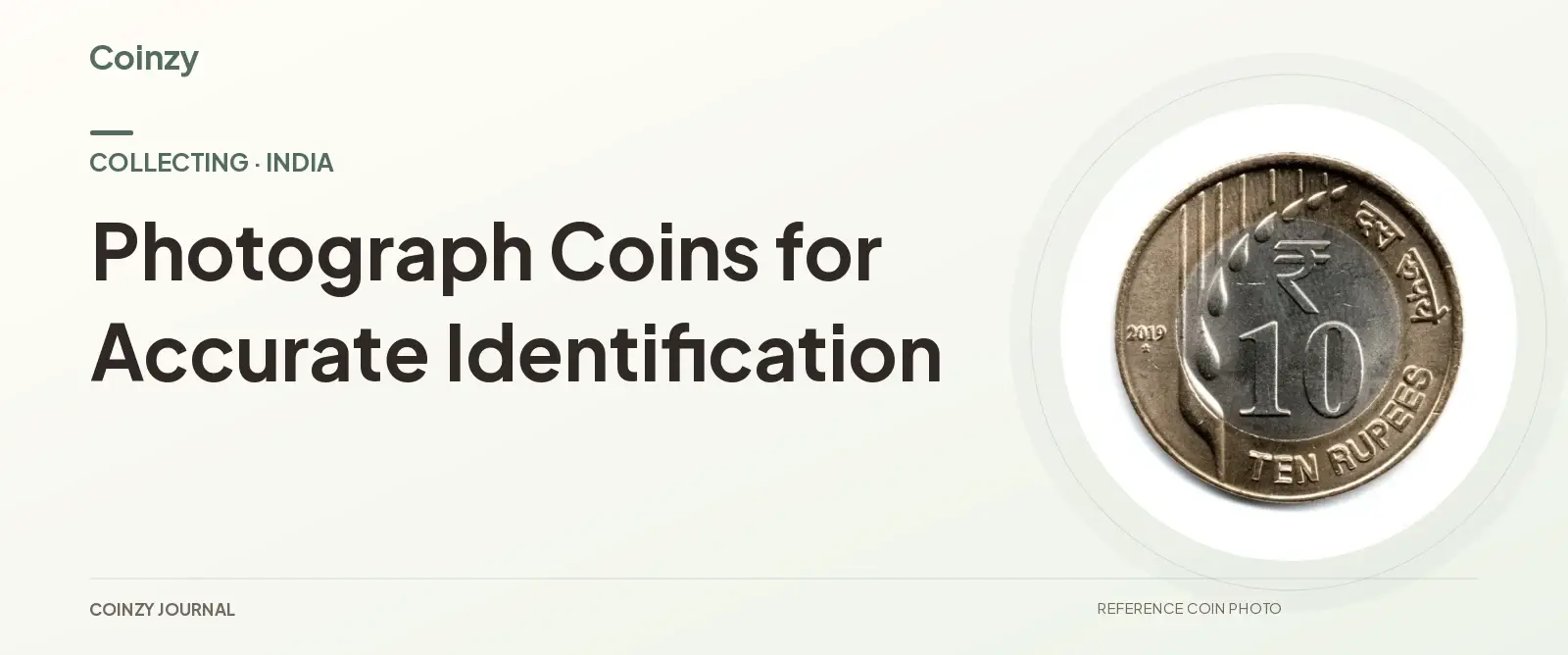
Thumbnail: Indian 10 rupee coin (2019).jpg by Numislogist. CC BY-SA 4.0. Cropped, resized and composed with title and background.
Photograph a coin clearly from both sides and include the edge when it carries identifying features. Consistent lighting and an uncropped outline help a reviewer distinguish design details from reflections.
What should you know about photographing a coin for identification?
Keep the camera steady and focus on the coin rather than the background. Use light that makes legends and relief readable without creating a bright area that hides part of the surface.
Which evidence should you use?
An identification record should connect each photograph to the same physical coin. Add readable denomination, date and measurements separately rather than expecting a photograph to prove information it cannot show.
U.S. Mint: Anatomy of a CoinWhat mistake should you avoid?
Filters, artificial sharpening and colour adjustments can introduce misleading detail. Preserve the original image and explain any processing used for a close-up.
How does this work in practice?
A phone focuses on the holder while the coin’s date remains blurred. Changing focus and retaking the image is more useful than enlarging the blurred file.
For photographing a coin for identification, make the observation reproducible: keep the photographs, identification notes and the reference that led to your conclusion together. Someone returning to the coin later should be able to see what was known and what remained uncertain without repeating the entire investigation.
Choose the least intrusive method that answers the question. If better lighting, a clearer photograph or a more suitable reference would resolve the problem, use that before changing a holder or surface. In photographing a coin for identification, protecting the original evidence is part of reaching a reliable conclusion.
Record a correction when better evidence changes your understanding. An inventory is a working research record, not a collection of claims that can never be revised. Keeping an earlier interpretation separate from the current attribution helps you explain the change and avoid passing an outdated description to another collector.
What should your next steps be?
- Photograph the full obverse.
- Photograph the full reverse.
- Add a relevant edge view.
- Use close-ups for unreadable marks.
- Keep originals and label the images consistently.
Work through the checklist in order and keep the outcome of each step with your record of photographing a coin for identification. If a step cannot be completed, state the missing information explicitly. This makes it easier to ask for the right photograph, reference or professional opinion instead of substituting a guess.
When is more evidence needed?
Use the image set to ask a specific identification question. If important features remain unclear, retake them before relying on an automated match or another person’s guess.
Frequently asked questions
Can a photograph settle the question on its own?
A photograph can help with photographing a coin for identification, but its usefulness depends on the visible detail and the question being asked. Request complete views and a relevant close-up when necessary. If the outcome depends on an unseen surface, an exact measurement or physical authentication, explain that limitation and seek the appropriate assessment.
What should I keep in my collection record?
Keep the coin’s identification, the images you examined and the source behind the conclusion about photographing a coin for identification. Add the transaction or assessment documents when relevant, and distinguish a confirmed fact from an opinion. Update the record when later evidence changes an important detail rather than silently replacing the original account.
How should you use a professional opinion?
Ask the reviewer to explain the scope of the answer about photographing a coin for identification: what evidence was examined, which conclusion it supports and which questions remain open. Keep that explanation with the original record. A useful opinion should help you choose a next action, such as obtaining a clearer image, checking a reference or arranging physical examination; it should not require you to ignore information that conflicts with the conclusion.
Where can you continue your research?
Browse the Coinzy catalogueRead more collecting guidesRequest an expert evaluationU.S. Mint: Caring for Your Coin CollectionCoinzy Editorial Team
Coinzy publishes practical coin collecting, identification and marketplace guides with links to the references used. Coin-specific authenticity and grading questions may require an independent expert assessment.