
Ancient Roman coins
14k+ coins · up to $50,000
Browse Catalogue
Explore popular collecting categories, from ancient Roman to rare American.


Want to check your coins value? Get it evaluated first, then list to verified buyers.

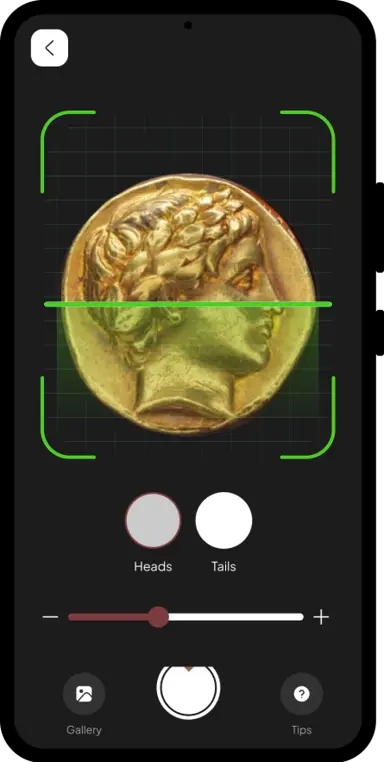
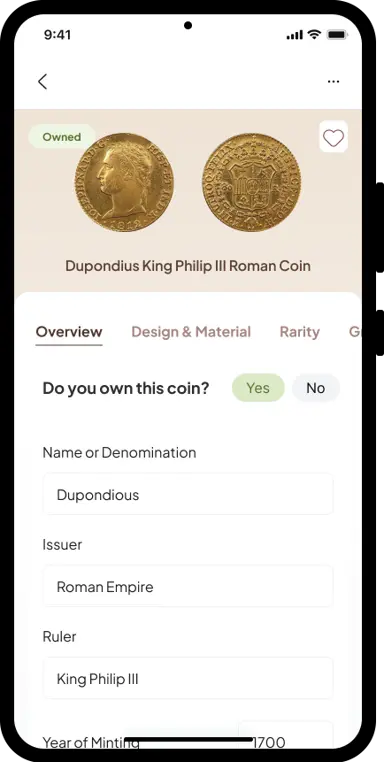
MOBILE APP
Identify coins using your camera. Your collection syncs across devices.
1M+
Daily users
4.3+★
User feedback rating
1.5M+
Items cataloged
20K+
Community members

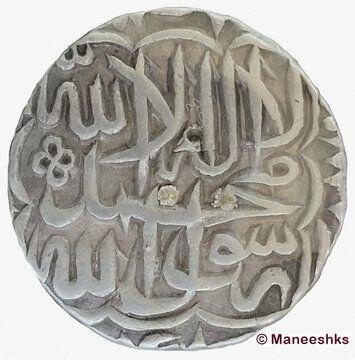
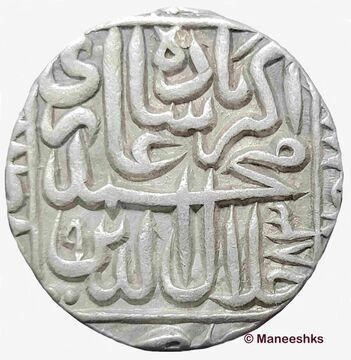

Estimated Value
No recent market data yet
Name or Denominations
1 Rupee
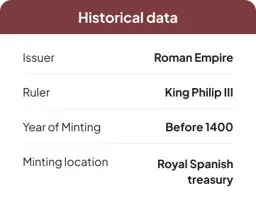
Issuer
Mughal Empire (India)
Ruler
Akbar (1556-1605)
Year of Minting
975-985 (1568-1578)
Currency
Rupee (1540-1842)
Shape
Round (irregular)
Rarity
Ultra rare
Weight
11.34 g
Diameter
25 mm
Thickness
NA
Material
Silver
Shape
Round (irregular)
Edge Type
Plain
Technique
NA
Front design
NA
Back design
NA
Year of Minting
975-985 (1568-1578)
Emperor
Akbar (1556-1605)
Mint location
Agra , India
Mint mark
NA
Orientation
Coin alignment ↑↓
Inscriptions
Obverse: Kalima-e-Tayyab: La ilaha illallah Mohammad Rasool Allah Reverse: Jalal-al din Muhammad Akbar Badshah Ghazi ٩٨٣
Context
The minting technology employed for such coins was Die-Struck. 'Dar-ul-Khilafat' The AH year is available on the reverse of the coin Dar-ul-Khilafat When Humayun took the throne after Babur’s death in 1530, he gave Agra three names over the course of ten years: Dar-ul-Khilafat meaning ‘seat of government’, Dar-ul-Fath meaning ‘seat of conquest’ and Dar-ul-Aman meaning ‘seat of safety’. As Akbar’s career was almost entirely spent on elephant-back, in one conquest or another, he made extensive use of a travelling mint. Living in a camp necessitated a mint inside that camp. The majority of coins issued in Mughal camps bear the mint name Urdu Zafar Qarin, literally meaning ‘camp associated with victory’. The term Dar-ul-Khilafat appears on a variety of coins instead of Agra, which was the capital of Akbar's empire. The term is present in coins from Ahmadabad, Akbarpur, Awadh, Bahraich, Dogaon, Jaunpur, Lucknow, Lahore, Malpur and Kanauj, implying Akbar’s presence in these places at the time the coins were minted, as one of his titles was Khilafat-i-ilahi. Mughals and Akbar Mughal history in India spans from 1526 CE to 1857 CE. With a firm foundation for its administration, the Mughals were able to establish a solid economy and flourishing trade. The Mughal Empire in India was established by Babur. Babur, a descendant of two of history’s most famous figures – Timur and Genghis Khan, was the first Mughal ruler to acquire territory in India, while his grandson, Akbar is considered to be the one to truly establish Mughal rule. Babur’s son, Humayun lost his empire for almost 15 years, but regained it with help from the Shah of Persia. Neither Babur nor Humayun were able to consolidate Mughal rule in the country. It was under Akbar that the Mughal Empire took shape and grew to be one of the greatest empires to rule India. Akbar was a strong ruler and is known for his religious tolerance. He appointed officials based on their merit instead of their religion. Akbar was also known to have treated his defeated enemies with respect by appointing them to the Mughal court. He married a Rajput princesses to form political alliances with Rajput kings and appointed his in-laws to various important posts in his court. Akbar is known to have invited scholars across all religions to his court for discussions on the matters on religion, God and Philosophy. He founded the religion, Din-i-Ilahi, which imbibed teachings from Hinduism, Islam, Christianity, Jainism and Zoroastrianism.
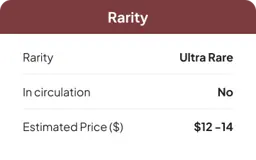
Rarity
Ultra rare
Coin type
Standard circulation
In circulation
No
Demonetized
Yes
Marketplace listings
0

Subscribe to Premium
Unlock more coin details with Premium.