
Ancient Roman coins
14k+ coins · up to $50,000
Browse Catalogue
Explore popular collecting categories, from ancient Roman to rare American.


Want to check your coins value? Get it evaluated first, then list to verified buyers.

MOBILE APP
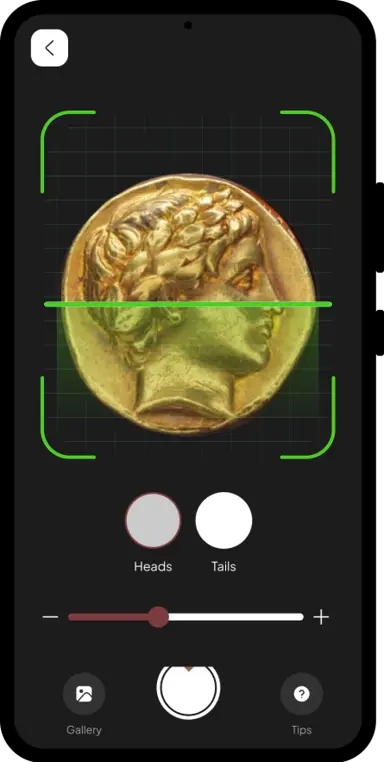
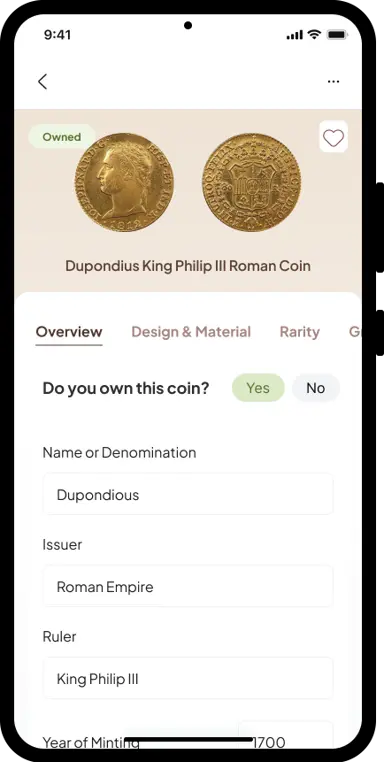
Identify coins using your camera. Your collection syncs across devices.
1M+
Daily users
4.3+★
User feedback rating
1.5M+
Items cataloged
20K+
Community members


Estimated Value
No recent market data yet
Name or Denominations
2 Rupees 8 Annas (2.5)
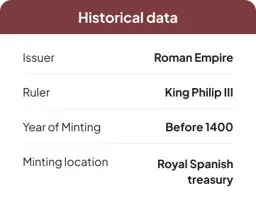
Issuer
India - British (British India)
Ruler
George VI (1936-1947)
Year of Minting
1941
Currency
Rupee (1770-1947)
Shape
Round
Rarity
Ultra rare
Weight
14.58 g
Diameter
NA
Thickness
NA
Material
Silver
Shape
Round
Edge Type
Reeded. Security or plain may appear on Restrikes.
Technique
Milled
Front design
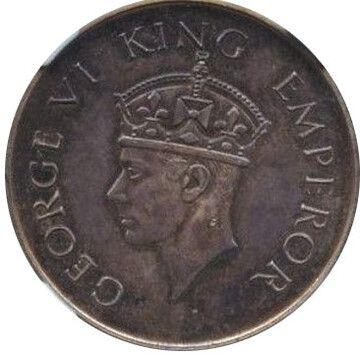
King George VI facing right, crowned, with Lettering around. Dot below bust.
Back design
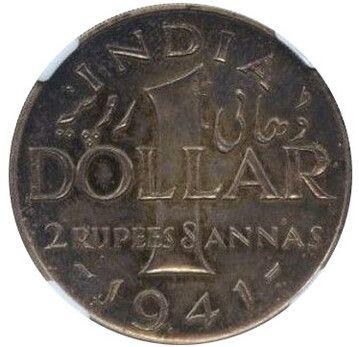
Denomination in both decimal and Pre-decimal currency. Date below and State above.
Year of Minting
1941
Emperor
George VI (1936-1947)
Mint location
Kolkata / Calcutta / Murshidabad , India (1757-date)
Mint mark
NA
Orientation
Medal alignment ↑↑
Inscriptions
Obverse: GEORGE VI KING EMPEROR Reverse: INDIA 1 DOLLAR 2 RUPEES & 8 ANNAS -1941 -
Context
There are two explanations for this coin. The first: Considering a switch to Decimal currency, the British government in India issued two pattern types in 1941 for a One-Dollar coin. The second holds that the minting of these coins was entirely divorced from decimalization. According to Pridmore in “Notes on Colonial Coins, Mr. A. P. SPENCER, Artist/Engraver, His Majesty's Mint, Calcutta and the re-designed Coinages of King George VI British India 1938-1947.” in the British Numismatic Society, 1968, the first thought of introducing decimal coinage was in 1945, with a Central Legislative Assembly Bill in 1946. This coin therefore, was an experiment for saving costs, material, manpower and introducing a common currency. This coin is a type 1 variety, issued in silver and a reverse designed by Calcutta Mint engraver A.P. Spencer (by Hand). Up until 1940, the Indian Mints had enough metal, machinery, and workers to keep the production of coinage for local use, Indian Kingdoms, Protectorates, Dependencies and British Colonies (the mints in India at this time produced coinage for India, IPS, Bhutan, Nepal, the Straits Settlements and Malaya, British African Colonies, Iraq, Saudi Arabia, Maria Thalers, and Muscat and Oman) but the Mint was feeling a shortage entering 1941 and even before that (American Silver Loans would start only in 1943). In late 1939, the decision had been taken to debase the Indian Rupee from the long held 917 fineness (Indian Silver or Indian Sterling) to the Quaternary Alloy (a local half silver blend decided upon by the authorities) based on rising metal prices, the diversion of silver imported from the states to the UK, and hoarding by the public fearing similar conditions as to World War I where the Rupee effectively was converted to a Fiat currency where the government could not back paper currency with Silver rupees weaponised by German spies and rumors (thus leading to the purchase of Morgan dollars from the states for minting the 1918 Sovereign and 15 Rupee issues. The introduction of larger value base metal coinage and severe unrest regarding the situation amongst other consequences). This was unpopular but saved the government metal which was used to mint more currency. In March 1941, the Government was considering a move towards a decimal currency, and a “Dollar” was chosen as a temporary name. The British Government had previously issued 2.5 Rupee Notes, and dollars were not foreign to India. American Dollars were sometimes used in informal transactions, the British Government had previously issued the right to mint Two Rupee Coins to the Bombay Presidency, in 1807, a Two Rupee Coin was issued (by the East India company), an Eight Testern Piece was issued in the 1600s by British Merchants in the name of Elizabeth I to compete with the Spanish Silver Dollar as well as issues by the Princely States, Mughal Empire, Afghanistan, Silver Pagodas issued by the British, and the German Empire with the East African Rupee. Before British domination, French and Spanish Silver Dollars were common in commerce and Maria Theresa Thalers were used often, even being minted for the war effort in the Bombay Mint. The Portuguese colonies in India had done the same, and British Trade were minted and used in India. Thus, the idea of a Dollar was not foreign to the Indian Populace but its introduction may have been unpopular. The issuance of a dollar would also be helpful to bridge the monetary gap in British colonies in Asia and beyond, primarily between the Rupee Denominated currencies (India, Myanmar, Sri Lanka, Mauritius and more) and Dollar Denominated Currencies (Straits Settlements, Malaya, Sarawak and more). The interchangeability of the two Currencies would lay the ground for future co-operation, amalgamation into a singular currency and increase of stability in British colonies after the end of the war. As the British were unable to hold the colonies after the war, alongside the collapse of the currencies in question, this never came to fruition. 225 Troy Grains - 14.58 Grams 450 Troy Grains - 29.16 Grams The Two and a Half Rupee combination in 1941 weighed 450 Troy Grains (ASW: 14.53 grams) at an exchange rate of 3/9d to Sterling (Down from the original 5/-). By issuing the new Dollar Coins, the government could make a profit as the coins would not be pure silver (likely Half Silver, but a higher purity such as 800 and 900 fine are a possibility) and thus save metal, machinery (More value from fewer coins, and decrease the number of lines producing coins by 3 - Two One Rupee and One Half Rupee or some other combination). This was seen as a massive boon considering the strain on the mints. The project's preparatory phase likely started in December 1940 and lasted till Mid 1941, when they were almost ready to be submitted to the Ministry of Finance. The Japanese Invasion ended this prospect. 1940 administrative reports from the Calcutta mint confirm the production of coin dies, matrices and other associated equipment. From British Numismatic Society, NOTES ON COLONIAL COINS, by F. Pridmore. Pn 117 Pn118 Pn119 Pn120
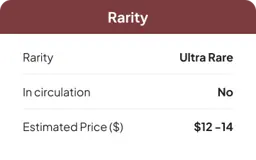
Rarity
Ultra rare
Coin type
Patterns
In circulation
No
Demonetized
Yes
Marketplace listings
0

Subscribe to Premium
Unlock more coin details with Premium.