
Ancient Roman coins
14k+ coins · up to $50,000
Browse Catalogue
Explore popular collecting categories, from ancient Roman to rare American.


Want to check your coins value? Get it evaluated first, then list to verified buyers.

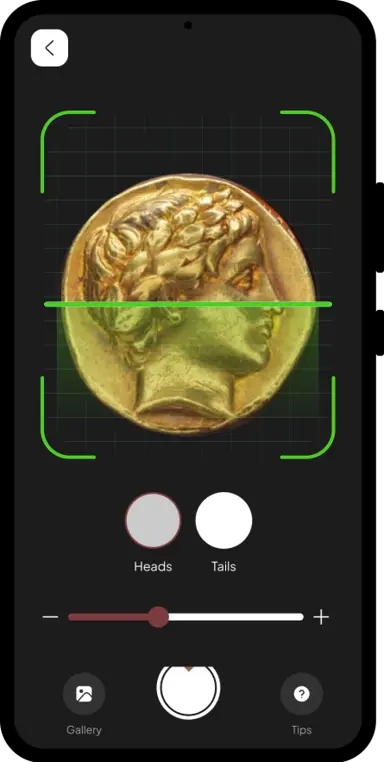
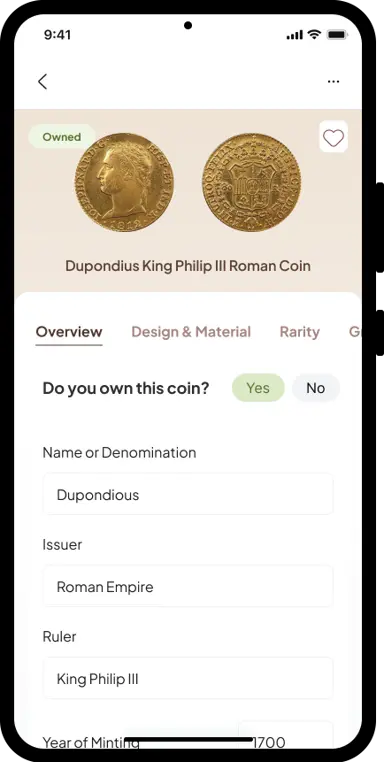
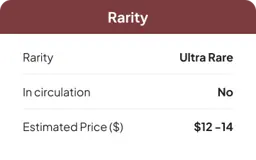
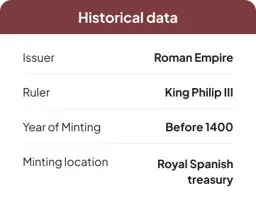
MOBILE APP
Identify coins using your camera. Your collection syncs across devices.
1M+
Daily users
4.3+★
User feedback rating
1.5M+
Items cataloged
20K+
Community members

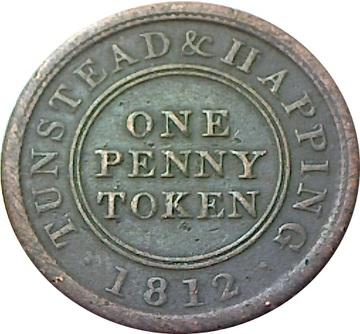

Estimated Value
No recent market data yet
Name or Denominations
1 Penny (1⁄240)
Issuer
United Kingdom (United Kingdom, British Overseas Territories and Crown Dependencies)
Ruler
NA
Year of Minting
1812
Currency
Pound sterling (1158-1970)
Shape
Round
Rarity
Ultra rare
Weight
NA
Diameter
35 mm
Thickness
2.5 mm
Material
Copper
Shape
Round
Edge Type
Central diagonal milling
Technique
Milled
Front design
Central double circle containing value. Lettering around, date below, beaded border
Back design
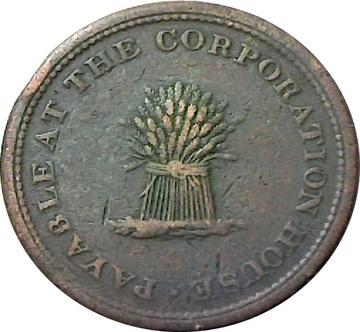
Central standing sheaf of wheat. Lettering around, beaded border
Year of Minting
1812
Ruler
NA
Mint location
NA
Mint mark
NA
Orientation
Medal alignment ↑↑
Inscriptions
Obverse: ONE PENNY TOKEN TUNSTEAD & HAPPING · 1812 · Reverse: PAYABLE AT THE CORPORATION HOUSE ·
Context
Established in 1785, Tunstead and Happing was one of the Norfolk Hundred Incorporations formed by Local Acts of Parliament in the latter half of the eighteenth century. Its membership comprised all the parishes in the Tunstead and Happing Hundreds except for the parish of North Walsham. The Act For the better Relief and Employment of the Poor within the Hundreds of Tunstead and Happing, in the County of Norfolk (25 Geo.3. c.27.) established a board of guardians to administer poor relief including the operation of a 'House of Industry' or workhouse. The Tunstead and Happing House of Industry was erected in 1785 at Smallburgh. It appears to have had a large H-shaped main building with a number of other smaller ancillary buildings. The Tunstead Incorporation was one of the workhouses to issue its own coinage in the form of workhouse tokens in the early 1800s when there was a national shortage of copper coins. The tokens could be spent locally to buy bread and other basic commodities. By 1924, the workhouse was closed and inmates were maintained at the Loddon and Clavering union workhouse at Heckingham. The main workhouse building has been demolished. The surviving structures at the east of the site have now been adapated for residential and agricultural use.
Rarity
Ultra rare
Coin type
Merchant tokens
In circulation
No
Demonetized
Yes
Marketplace listings
0

Subscribe to Premium
Unlock more coin details with Premium.