
Ancient Roman coins
14k+ coins · up to $50,000
Browse Catalogue
Explore popular collecting categories, from ancient Roman to rare American.


Want to check your coins value? Get it evaluated first, then list to verified buyers.

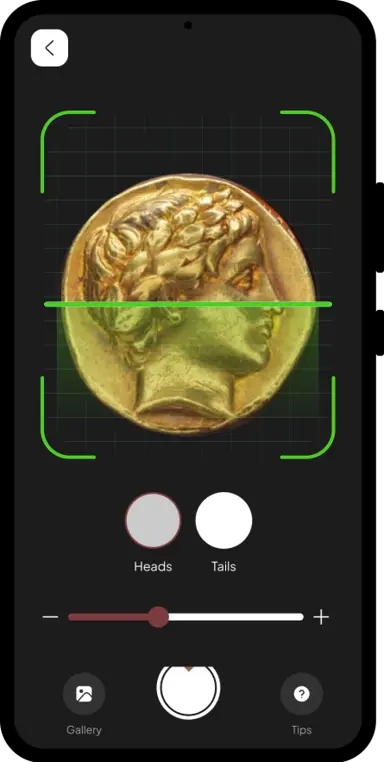
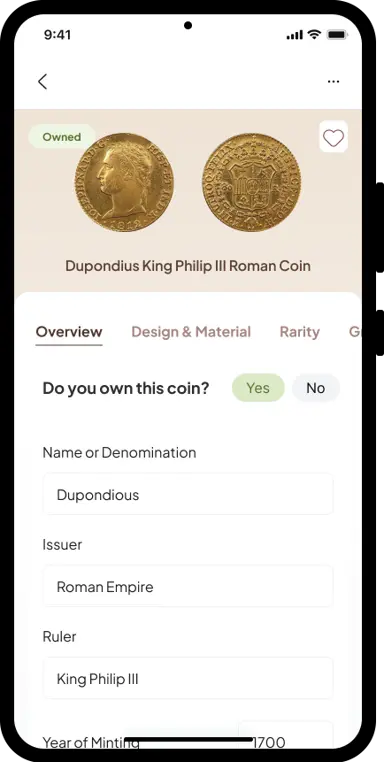
MOBILE APP
Identify coins using your camera. Your collection syncs across devices.
1M+
Daily users
4.3+★
User feedback rating
1.5M+
Items cataloged
20K+
Community members


Estimated Value
No recent market data yet
Name or Denominations
1 Farthing (1⁄960)
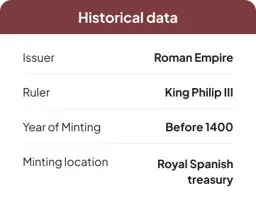
Issuer
United Kingdom (United Kingdom, British Overseas Territories and Crown Dependencies)
Ruler
NA
Year of Minting
1792
Currency
Pound sterling (1158-1970)
Shape
Round
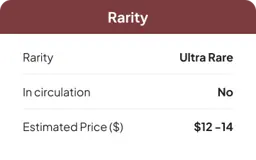
Rarity
Ultra rare
Weight
5.4 g
Diameter
21 mm
Thickness
NA
Material
Copper
Shape
Round
Edge Type
Plain with lettering
Technique
Milled
Front design
Bare headed and draped bust in profile of John Howard to left. Lettering around, beaded border
Back design
Date above a central monogrammed HH cypher in ornamental script. Lettering around, beaded border
Year of Minting
1792
Ruler
NA
Mint location
NA
Mint mark
NA
Orientation
Coin alignment ↑↓
Inscriptions
Obverse: IOHN HOWARD · F · R · S Reverse: PROMISSORY FARTHING · BIRMINGHAM 1792 H H
Context
Scarce Henry Hickman’s Birmingham (Warwickshire) copper Conder farthing token dated 1792. Issued by Henry Hickman, a wholesale and retail dealer in sheet, bar and rod iron - with a business at 3, Edgbaston Street, Birmingham. Hickman is also recorded as a die-sinker and toolmaker in Wrightson’s triennial Birmingham directory, 1818. The token was probably manufactured by William Mainwaring who worked as a diesinker for William Lutwyche at the latter's works in Birmingham, but Hickman himself, given his profession, may have been involved in creating the dies. William Mainwaring died in 1794. John Howard (a philanthropist, 2 September 1726 - 20 January 1790), in whose name this token was issued, was an expert in prisons and published the book 'The State of the Prisons in England & Wales' in 1777. He was elected a Fellow of the Royal Society in May 1756. In 1758, Howard married Henrietta Leeds who died in 1765, a week after giving birth to a son, also named John. He was appointed High Sheriff of Bedfordshire in 1773, initially for a one-year period. His final journey took him into Eastern Europe, and into Crimea. Whilst at Kherson, in what is now Ukraine, Howard contracted typhus on a prison visit and died, aged sixty-three. For a ten-year period extending from 1787-1797 almost the only “coins” in circulation in Britain were the Provincial, or “Conder” tokens. As they were designed and manufactured by the public, they were not limited by any rules or regulations. Taken as a group, the tokens form a history of a people in a way never seen before - or since. Through them, we can look in on life in late 18th century Britain. We can see how they lived and thought through their commerce, politics, advertising, and even view their architecture. Avidly collected at the time of their issue, many of these tokens survive in wonderful condition, pieces of history that can be held in the hand. Collectors today find them perhaps even more fascinating than they did years ago. The study of these tokens has proven to be rewarding to many, and the stories behind the tokens and the era are exciting to discover.
Rarity
Ultra rare
Coin type
Merchant tokens
In circulation
No
Demonetized
Yes
Marketplace listings
0

Subscribe to Premium
Unlock more coin details with Premium.