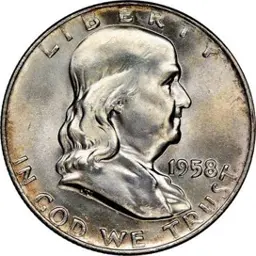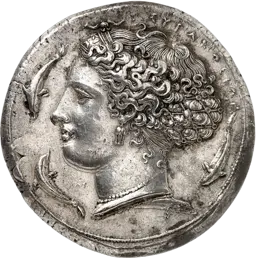

Ancient Roman coins
14k+ coins · up to $50,000
Browse Catalogue
Explore popular collecting categories, from ancient Roman to rare American.



Want to check your coins value? Get it evaluated first, then list to verified buyers.

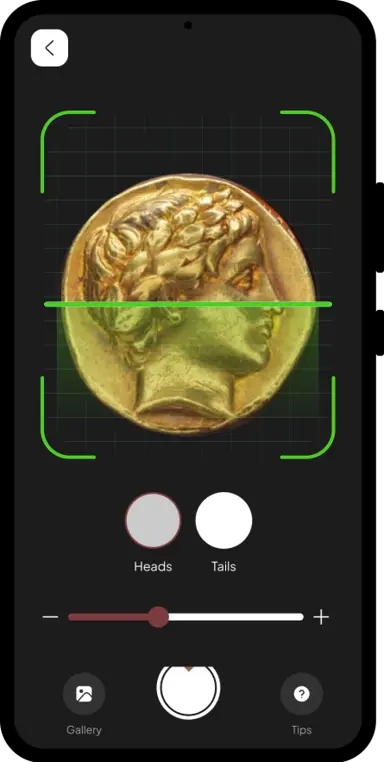
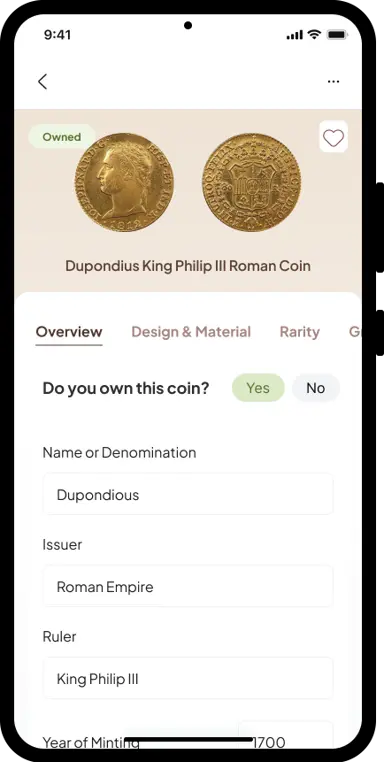
MOBILE APP
Identify coins using your camera. Your collection syncs across devices.
1M+
Daily users
4.3+★
User feedback rating
1.5M+
Items cataloged
20K+
Community members


Estimated Value
No recent market data yet
Name or Denominations
1 Penny (1⁄240)
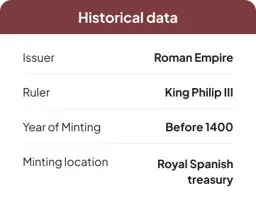
Issuer
United Kingdom (United Kingdom, British Overseas Territories and Crown Dependencies)
Ruler
NA
Year of Minting
1813
Currency
Pound sterling (1158-1970)
Shape
Round
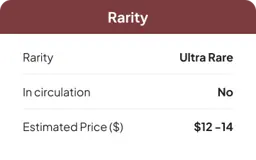
Rarity
Ultra rare
Weight
18.03 g
Diameter
34 mm
Thickness
2.2 mm
Material
Copper
Shape
Round
Edge Type
Centre grained
Technique
Milled
Front design
Centre circle of a sunk field containing a bridge with five arches over the river Tees, with a small boat. Lettering above and date below (in large exergue). Incuse lettering around on raised broad border.
Back design
Centre circle of a sunk field containing Britannia seated left, holding olive branch and trident, a shield at her side, ship lower left in distance, with blank exergue. Incuse lettering around on raised broad border.
Year of Minting
1813
Ruler
NA
Mint location
NA
Mint mark
NA
Orientation
Coin alignment ↑↓
Inscriptions
Obverse: CHRISTOPHER & JENNETT * STOCKTON * TEES 1813 Reverse: BRITANNIA * ONE PENNY TOKEN *
Context
1813 Great Britain Christopher & Jennett Stockton Railway Penny Token. According to Thomas Richmond, in his “Local Records of Stockton”, Christopher and Jennett issued a series of tokens in 1812-13. Small change was in short supply as so much silver had been used to pay for England’s wars against France. So, all low value tokens were issued in copper instead of silver. As well as the one penny token, C&J also issued tokens for a halfpenny as well as six pence, and one shilling. Back in the late 1700's and early 1800's there was a shortage of small change, pennies and halfpennies etc so the government allowed local businesses all over the country to mint their own coins for local use. There are literally hundreds of different types of these coins, depicting different local scenes etc along with the names of the people who minted them. This was also a good form of advertising. The names on the Stockton coin were of a local firm of printers, publishers and booksellers. Looking closely, someone is travelling across the bridge on horseback. This was built in 1764-69 and was demolished in 1887 to be replaced by the Victoria bridge. Note the old stone bridge had five arches to it. Issued late in the reign of King George III.
Rarity
Ultra rare
Coin type
Merchant tokens
In circulation
No
Demonetized
Yes
Marketplace listings
0

Subscribe to Premium
Unlock more coin details with Premium.