
Ancient Roman coins
14k+ coins · up to $50,000
Browse Catalogue
Explore popular collecting categories, from ancient Roman to rare American.


Want to check your coins value? Get it evaluated first, then list to verified buyers.

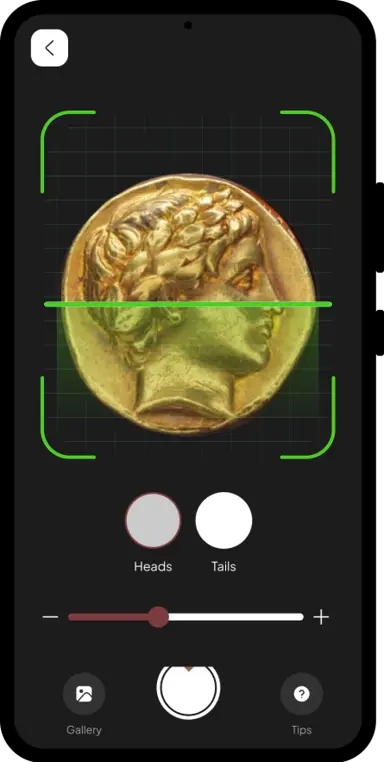
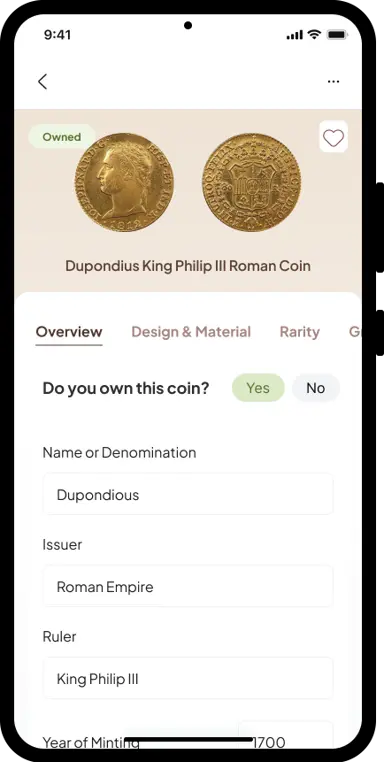
MOBILE APP
Identify coins using your camera. Your collection syncs across devices.
1M+
Daily users
4.3+★
User feedback rating
1.5M+
Items cataloged
20K+
Community members


Estimated Value
No recent market data yet
Name or Denominations
1 Penny (1⁄240)
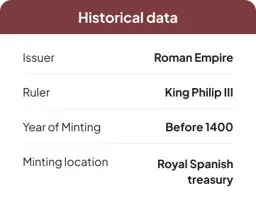
Issuer
United Kingdom (United Kingdom, British Overseas Territories and Crown Dependencies)
Ruler
NA
Year of Minting
1814
Currency
Pound sterling (1158-1970)
Shape
Round
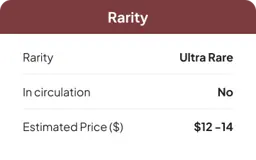
Rarity
Ultra rare
Weight
28.54 g
Diameter
37 mm
Thickness
2.8 mm
Material
Copper
Shape
Round
Edge Type
Central diagonal milling \ \ \ \
Technique
Milled
Front design
West view of the Workhouse, with date below. Lettering above and below, beaded border
Back design
Shield in centre. Legend in two lines both above and below, beaded border
Year of Minting
1814
Ruler
NA
Mint location
NA
Mint mark
NA
Orientation
Coin alignment ↑↓
Inscriptions
Obverse: BIRMINGHAM 1814 ONE PENNY Reverse: ONE POUND NOTE FOR 240 TOKENS PAYABLE AT THE WORKHOUSE
Context
Birmingham Workhouse (Warwickshire) copper penny token dated 1814. The Birmingham Workhouse for the Overseers of the Poor was located in Lichfield Street, Birmingham and accommodated 600 paupers and children at its peak. The Workhouse, Birmingham, Warwickshire. Up to 1834: On 3rd April 1734, a meeting was held and orders given for the purchasing of a site and building of a workhouse for the parish of Birmingham (Dent, 1893). The workhouse was erected soon afterwards on land between Lichfield Street and Steelhouse Lane, where Coleridge Passage now stands. The building cost £1,173 and was intended to accommodate 600. Later extensions included an infirmary wing at the left erected in 1766 at a cost of £400, and a workshop wing at the right erected in 1779 at a cost of £1,100. In 1783, Birmingham was incorporated under a local Act of Parliament, giving it greater powers over the management of poor relief. The Incorporation was managed by a body of 108 Guardians of the Poor and was enabled to set up a workhouse 'with Apartments for the sick and diseased, and for the old, impotent and infirm, and for those able to work, for the carrying on divers Trades, Works, and Manufactures, as also for the Punishment of the idle, refractory, and profligate'. In fact, the Incorporation appears to have continued using the existing parish workhouse building for a further 70 years. By 1848, it could accommodate 645 inmates and was generally full. In 1789, Josiah Robins, a worsted maker in Digbeth, was given permission to set up a workshop in premises adjoining the workhouse, and to employ the inmates. Their earnings were paid each week to the workhouse governor. Some inmates, who were deemed capable, were appointed as instructors and supervisors and given separate accommodation at the workhouse. From around 1812, during a national shortage of coins, Birmingham was one of several workhouses to issue workhouse tokens - specially minted coins given as poor relief. Local shopkeepers could then redeem the tokens at the workhouse. This example, from 1814, features a picture of the Incorporation workhouse, and the wording 'ONE POUND NOTE PAYABLE AT THE WORKHOUSE FOR 240 TOKENS'.
Rarity
Ultra rare
Coin type
Merchant tokens
In circulation
No
Demonetized
Yes
Marketplace listings
0

Subscribe to Premium
Unlock more coin details with Premium.