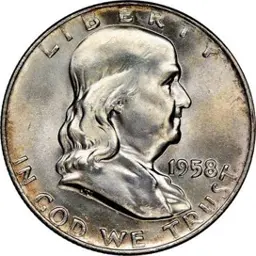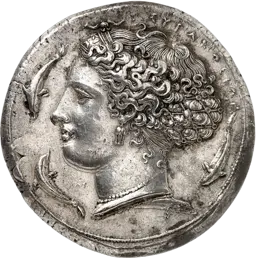

Ancient Roman coins
14k+ coins · up to $50,000
Browse Catalogue
Explore popular collecting categories, from ancient Roman to rare American.



Want to check your coins value? Get it evaluated first, then list to verified buyers.

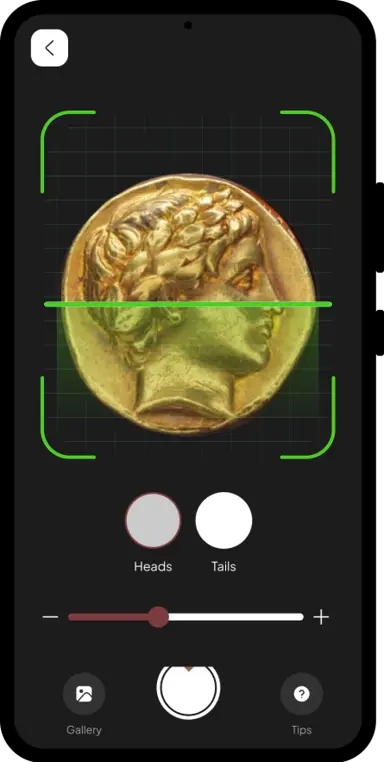
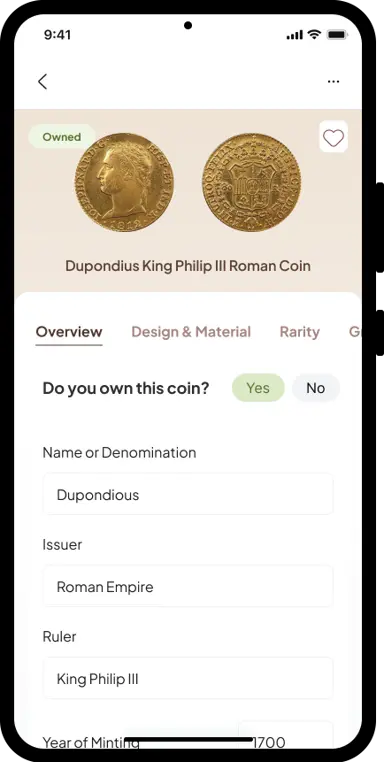
MOBILE APP
Identify coins using your camera. Your collection syncs across devices.
1M+
Daily users
4.3+★
User feedback rating
1.5M+
Items cataloged
20K+
Community members


Estimated Value
No recent market data yet
Name or Denominations
1 Crown (¼)
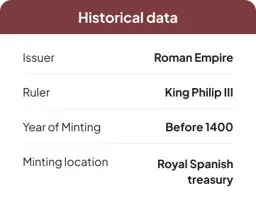
Issuer
United Kingdom (United Kingdom, British Overseas Territories and Crown Dependencies)
Ruler
George III (1760-1820)
Year of Minting
1817
Currency
Pound sterling (1158-1970)
Shape
Round
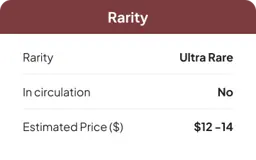
Rarity
Ultra rare
Weight
48.69 g
Diameter
NA
Thickness
NA
Material
Gold (.9167)
Shape
Round
Edge Type
NA
Technique
Milled
Front design
Right facing laureate bust of King George III, legend around, date below.
Back design
Crowned royal shield of arms, legend around.
Year of Minting
1817
King
George III (1760-1820)
Mint location
NA
Mint mark
NA
Orientation
Coin alignment ↑↓
Inscriptions
Obverse: GEORGIUS III D:G: BRITANNIARUM REX W. WYON 1817 Reverse: INCORRUPTA FIDES VERITASQUE
Context
In 1817, the English government issued a new silver crown and a new gold coin: the sovereign. Struck in the new London Monetary Workshop presses, these coins are of the type of Saint George slaying the dragon. The original dies are the work of an outstanding Italian gem engraver, Benedetto Pistrucci. When the project was launched in 1816, another engraver, English, William Wyon, suggested his model. 18 in silver and 7 in gold were produced by the Royal Mint. The coin by Pistrucci was finally chosen. He then became chief engraver while Wyon had to wait another ten years to be chief engraver, in 1828. The customary name of the crown proposed by William Wyon, Incorrupta Crown, is variously interpreted by British numismatists. It would derive from the Latin text of the reverse INCORRUPTA FIDES VERITAS QUE, which can be translated as 'A Faith Without blemish ' or 'A Faith Beyond Corruption'. Alas, this beautiful proclamation of intention is not enough to convince the influential Joseph Banks, renowned botanist, and friend of the director of the Royal Mint at the time, who knew how to place his Roman protege in place of the young and promising William Wyon.
Rarity
Ultra rare
Coin type
Patterns
In circulation
No
Demonetized
Yes
Marketplace listings
0

Subscribe to Premium
Unlock more coin details with Premium.