
Ancient Roman coins
14k+ coins · up to $50,000
Browse Catalogue
Explore popular collecting categories, from ancient Roman to rare American.


Want to check your coins value? Get it evaluated first, then list to verified buyers.

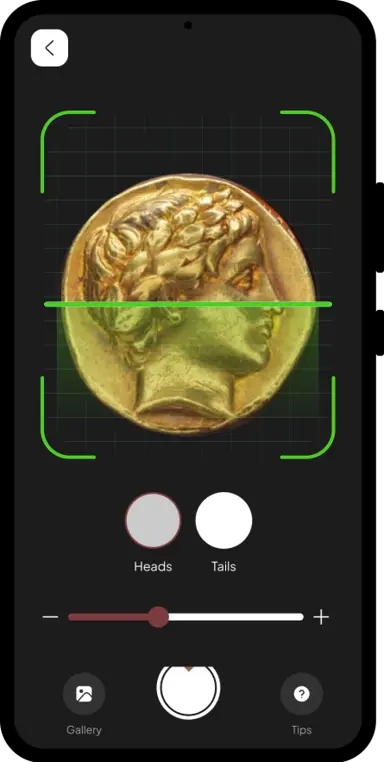
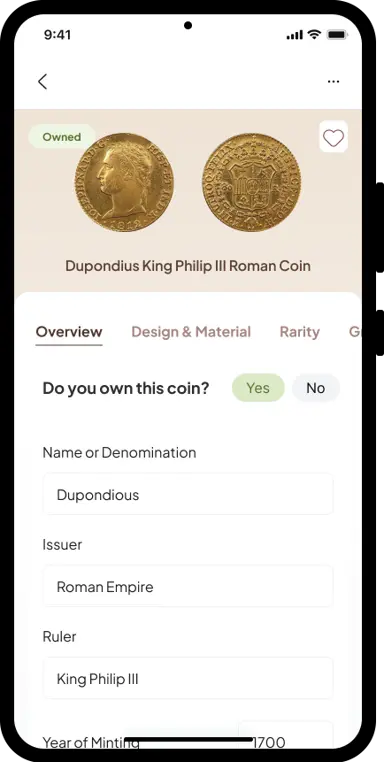
MOBILE APP
Identify coins using your camera. Your collection syncs across devices.
1M+
Daily users
4.3+★
User feedback rating
1.5M+
Items cataloged
20K+
Community members


Estimated Value
No recent market data yet
Name or Denominations
1 Cash - Kaiping yuanbao; Tin imitation
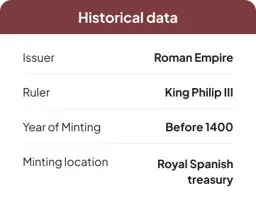
Issuer
Maritime Southeast Asia
Ruler
NA
Year of Minting
NA
Currency
NA
Shape
Round with a square hole
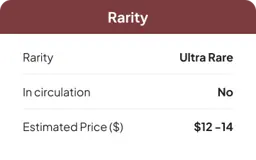
Rarity
Ultra rare
Weight
1.12 g
Diameter
20.5 mm
Thickness
0.75 mm
Material
Tin
Shape
Round with a square hole
Edge Type
Plain
Technique
NA
Front design
Four Chinese ideograms read clockwise.
Back design
Plain
Year of Minting
NA
Ruler
NA
Mint location
NA
Mint mark
NA
Orientation
NA
Inscriptions
Obverse: 開 寶 平 元
Context
Tin local imitation of a chinese cash coin from Kaiping yuanbao in seal script. Found in Musi River (Sumatra, Indonesia). Different sizes are possible: See pic.... In 1710 tin ore deposits were found on nearby Bangka Island, then controlled by the Sultan of Palembang. The quantity of tin coins minted in the area henceforth increased dramatically and consisted of two types: the first issued under the direct authority of the sultan, mainly small in size with Malay script, and the second issued for the Chinese mining communities on Bangka Island who were allowed to pay a third of their wages in locally produced coins. This situation continued until the Dutch garrison was massacred by a local force in 1811, preceeding the occupation of Java and Sumatra by the British in 1812. They remained in control until 1816, resulting in the minting of a very distinct issue of Pitis identifying Palembang as part of the state of 'Inglistan' (lot 1417).
Rarity
Ultra rare
Coin type
Standard circulation
In circulation
No
Demonetized
Yes
Marketplace listings
0

Subscribe to Premium
Unlock more coin details with Premium.