
Ancient Roman coins
14k+ coins · up to $50,000
Browse Catalogue
Explore popular collecting categories, from ancient Roman to rare American.


Want to check your coins value? Get it evaluated first, then list to verified buyers.

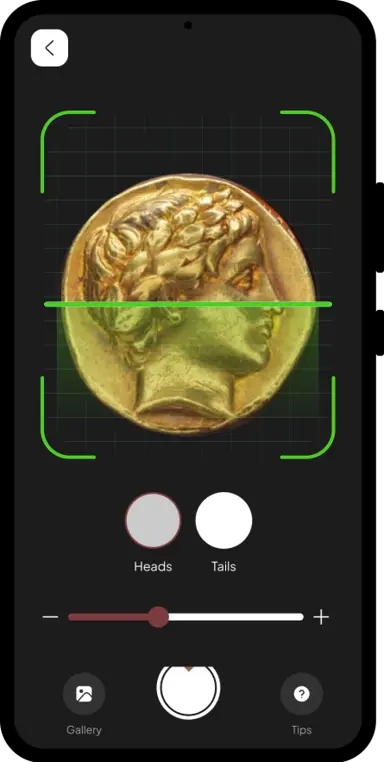
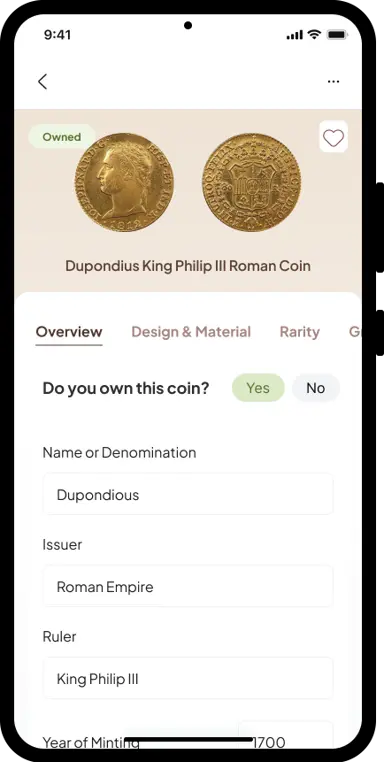
MOBILE APP
Identify coins using your camera. Your collection syncs across devices.
1M+
Daily users
4.3+★
User feedback rating
1.5M+
Items cataloged
20K+
Community members


Estimated Value
No recent market data yet
Name or Denominations
1 Farthing (1⁄960)
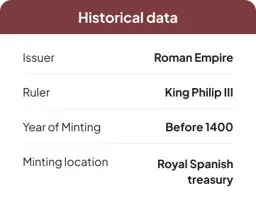
Issuer
United Kingdom
Ruler
NA
Year of Minting
1835
Currency
Pound sterling ( 1158-1971 )
Shape
Round
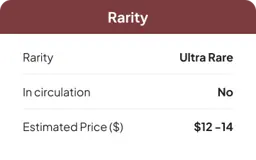
Rarity
Ultra rare
Weight
NA
Diameter
21.6 mm
Thickness
1 mm
Material
Copper
Shape
Round
Edge Type
Plain
Technique
Milled
Front design
Legend on four lines, the upper and lower curved. Beaded border
Back design
A mounted Knight Errant on horseback, on ground to left, spear in right hand. Date below, beaded border
Year of Minting
1835
Ruler
NA
Mint location
NA
Mint mark
NA
Orientation
Medal alignment ↑↑
Inscriptions
Obverse: CHAMPION GROCER & IRONMONGER NETTLEBED Reverse: 1835
Context
Trade tokens continued to be issued by inn keepers and tradesmen from time to time in the 18th century to supplement for the lack of small coinage minted by Government - although no Nettlebed examples of that period exist today. During the early 1800's William Samuel Champion had a business in Watlington Street, just below the old Sun inn, described variously in the Gardener’s (1852) and Post Office (1847 & 1854) Directories as “grocer, draper, ironmonger, stationer, druggist and manufacturer of British wines.” A sample token issued by him, now referred to as “Champion’s Nettlebed mounted knight farthing 1835”, diameter 21mm, has recently been discovered. The obverse shows the wording “Champion Nettlebed, Grocer & Ironmonger” and a mounted knight on the reverse with the date 1835. The figure is thought to represent the King’s Champion, making a play on the issuer’s name. Tokens were issued by a wide range of tradesmen at the time to encourage trade. Some owners of businesses paid staff with tokens which could only be used to buy goods from the employer often at highly inflated prices, which meant a lowering of actual salary and disposable income. However, tokens had a fatal flaw - they could generally only be used in the shop or inn that issued them. So their decline was inevitable - helped also by official crackdown. The Champion token is now also in the Museum of Oxfordshire Museum. William Champion appears to have gone out of business around 1855. There does not seem to be a family connection with Champion’s ironmongers in Wallingford and Henley (now closed). He is recorded as trustee of the newly established Nettlebed Congregational Chapel in 1840. The reverse design is probably a symbol of the issuer's name.
Rarity
Ultra rare
Coin type
Emergency coinage › Merchant tokens
In circulation
No
Demonetized
Yes
Marketplace listings
0

Subscribe to Premium
Unlock more coin details with Premium.