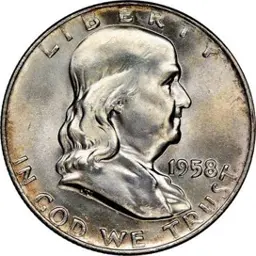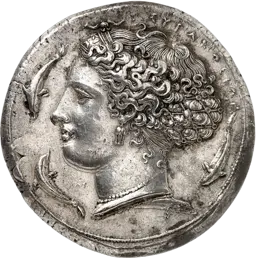

Ancient Roman coins
14k+ coins · up to $50,000
Browse Catalogue
Explore popular collecting categories, from ancient Roman to rare American.



Want to check your coins value? Get it evaluated first, then list to verified buyers.

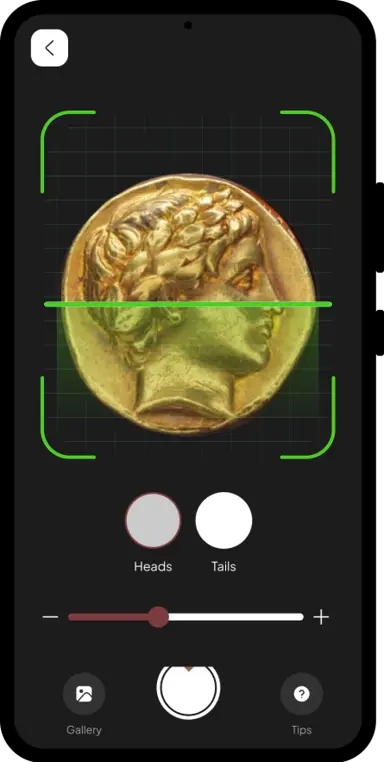
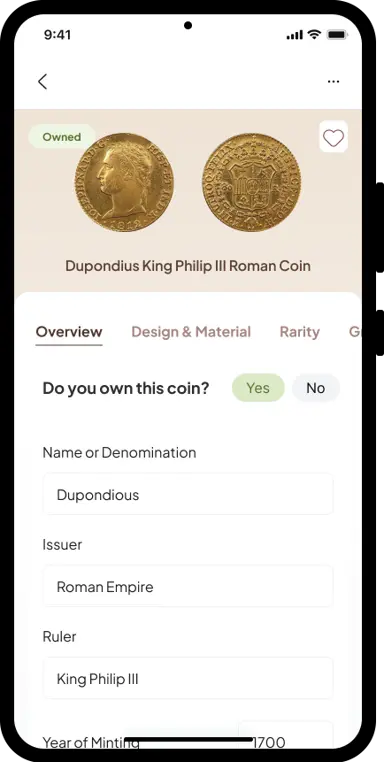
MOBILE APP
Identify coins using your camera. Your collection syncs across devices.
1M+
Daily users
4.3+★
User feedback rating
1.5M+
Items cataloged
20K+
Community members


Estimated Value
No recent market data yet
Name or Denominations
1 Denier
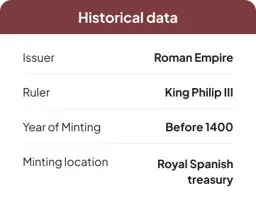
Issuer
Lordship of Padova (Italian States)
Ruler
Francis I the Old ( 1350-1388 )
Year of Minting
1355-1388
Currency
Denier
Shape
Round (irregular)
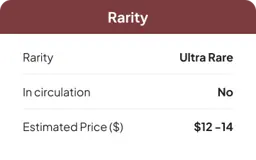
Rarity
Ultra rare
Weight
0.35 g
Diameter
12 mm
Thickness
NA
Material
Billon
Shape
Round (irregular)
Edge Type
Plain
Technique
Hammered
Front design
Six-rayed star, which divides legend and inner linear circle.
Back design
Large gothic "F" within inner linear circle.
Year of Minting
1355-1388
Lord
Francis I the Old ( 1350-1388 )
Mint location
NA
Mint mark
NA
Orientation
Medal alignment ↑↑
Inscriptions
Obverse: PADVA Reverse: ✠ CIVITAS F
Context
Scyphate coin. Scyphate is a term frequently used in numismatics to refer to the concave or "cup-shaped" Byzantine coins of the 11th–14th centuries. This usage emerged in the 19th century, when the term scyphatus, attested in south Italian documents of the 11th and 12th centuries, was erroneously interpreted as deriving from the Greek word skyphos (σκύφος, "cup"). In reality, the term probably derives from the Arabic word shafah, "edge, rim", and refers to the distinctive and conspicuous border of the early histamena gold coins. Due to this misunderstanding, the term "scyphate" has been widely applied to the concave gold, silver, and copper coins of the late Byzantine Empire and the foreign issues imitating it. These coins are more properly designated as trachea (singular: trachy, from Greek τραχύ, "rough, uneven"). It is distinguished from the "Denaro Piccolo" of "Francesco I Da Carrara" by being a scyphate coin. CIVITAS (a term which, in the Latin political and juridical conception, designated the city-state, corresponding to the Polis of the Greeks; it also indicated the ensemble of citizens, distinguishing itself in this from urbs, which instead indicated the city as a complex of buildings and walls.)
Rarity
Ultra rare
Coin type
Standard circulation
In circulation
No
Demonetized
Yes
Marketplace listings
0

Subscribe to Premium
Unlock more coin details with Premium.