
Ancient Roman coins
14k+ coins · up to $50,000
Browse Catalogue
Explore popular collecting categories, from ancient Roman to rare American.


Want to check your coins value? Get it evaluated first, then list to verified buyers.

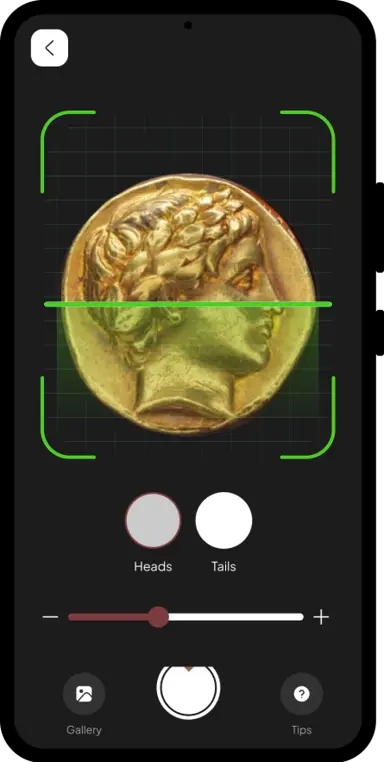
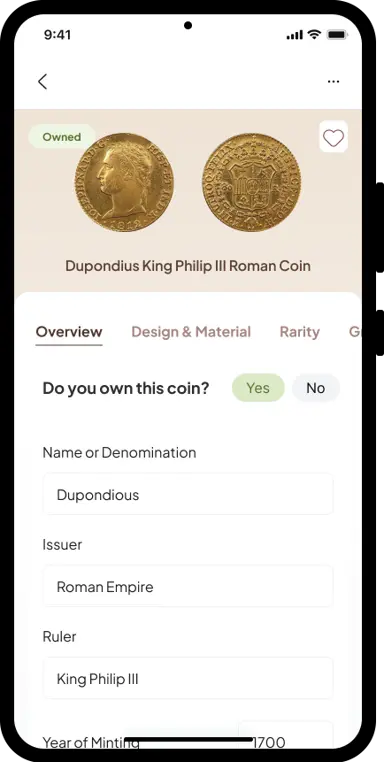
MOBILE APP
Identify coins using your camera. Your collection syncs across devices.
1M+
Daily users
4.3+★
User feedback rating
1.5M+
Items cataloged
20K+
Community members


Estimated Value
No recent market data yet
Name or Denominations
1 Farthing (1⁄960)
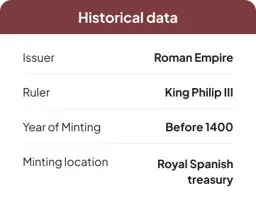
Issuer
England (United Kingdom)
Ruler
Charles I ( 1625-1649 )
Year of Minting
1643-1644
Currency
Pound sterling ( 1158-1970 )
Shape
Round (irregular)
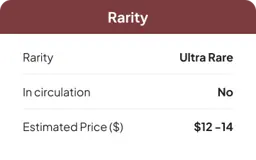
Rarity
Ultra rare
Weight
1.13 g
Diameter
13 mm
Thickness
NA
Material
Copper
Shape
Round (irregular)
Edge Type
NA
Technique
Hammered
Front design
Single-arched crown with crossed sceptres below. Sceptres have bosses on handles. Privy mark mullet at 12 o'clock, legend around. Note: varieties exist (see below)
Back design
Single rose, legend around, privy mark mullet at end.
Year of Minting
1643-1644
King
Charles I ( 1625-1649 )
Mint location
NA
Mint mark
NA
Orientation
Medal alignment ↑↑
Inscriptions
Obverse: CAROLV. D: G. MAG: BR Reverse: FRA: ET: HIB: REX.
Context
Everson Type 5a (Peck/BMC Type 3a, 348-9) has sceptres with bosses on the handles (pictured). It is bimetallic with copper centre and brass ring with brass wedge at 12 o'clock (sometimes absent or difficult to discern). Everson Type 5b (Peck/BMC Type 3b-e, 350-4) does not have bosses on the handles. It sometimes has a brass plug instead of a wedge, or no brass at all. This type has many legend variants, including: CAROLV MAG BR / FRA HIB (Peck 3b), FR HIB (Peck 3c); CAROLV MA BRI / FRA HIB (Peck 3d), FR HIB (Peck 3e). North#2293 The farthings with sceptres that cross under the crown are thought to have been struck under Parliament, who wanted to differentiate the design to make sure Charles I's farthings (used to pay his army) couldn't be exchanged for silver at the London Token House during the Civil War. James I and Charles I farthings were considered tokens as they were not legal tender. The mullet was a privy mark (to prevent forgery), not a mintmark, as farthings with all privy marks were pressed at the same location, sometimes on the same sheet of copper.
Rarity
Ultra rare
Coin type
Emergency coinage › Official necessity coins
In circulation
No
Demonetized
Yes
Marketplace listings
0

Subscribe to Premium
Unlock more coin details with Premium.