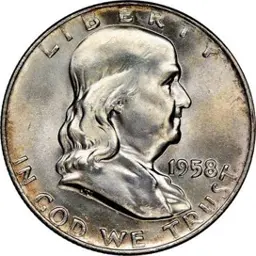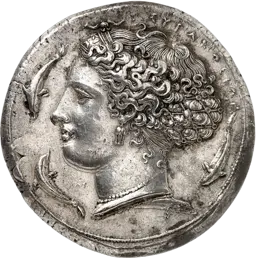

Ancient Roman coins
14k+ coins · up to $50,000
Browse Catalogue
Explore popular collecting categories, from ancient Roman to rare American.



Want to check your coins value? Get it evaluated first, then list to verified buyers.

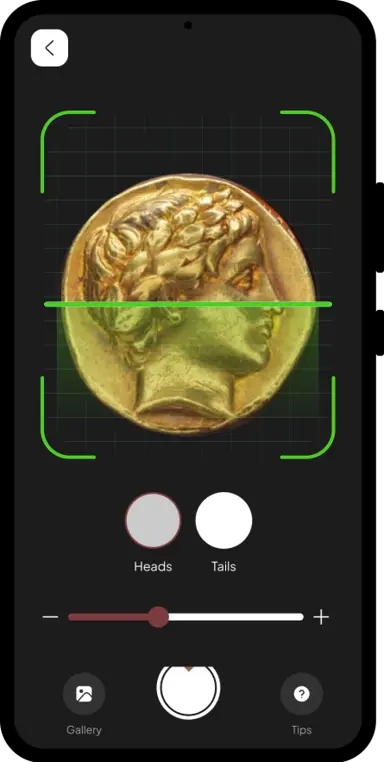
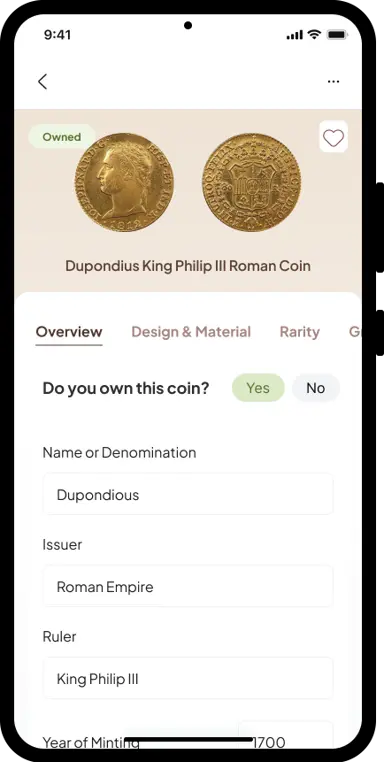
MOBILE APP
Identify coins using your camera. Your collection syncs across devices.
1M+
Daily users
4.3+★
User feedback rating
1.5M+
Items cataloged
20K+
Community members



Estimated Value
No recent market data yet
Name or Denominations
1 Farthing (1⁄960)
Issuer
United Kingdom
Ruler
NA
Year of Minting
1844
Currency
Pound sterling ( 1158-1971 )
Shape
Round
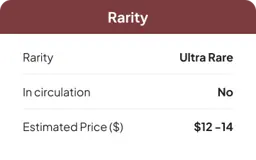
Rarity
Ultra rare
Weight
NA
Diameter
21 mm
Thickness
1 mm
Material
Copper
Shape
Round
Edge Type
Plain
Technique
Milled
Front design
Legend on five lines, the bottom curved. Beaded border
Back design
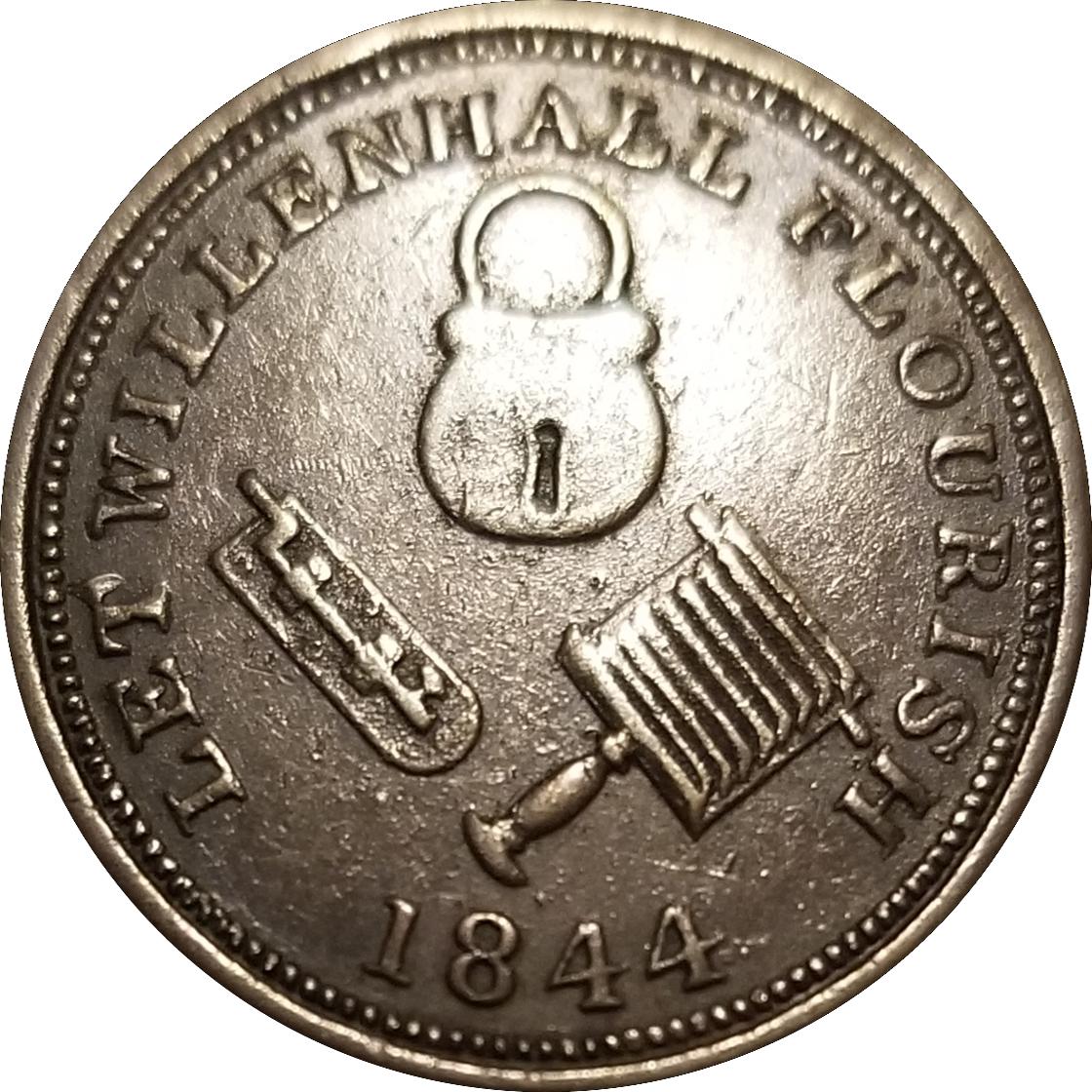
A padlock, door bolt, and curry-comb in centre with lettering around and date below. Beaded border
Year of Minting
1844
Ruler
NA
Mint location
NA
Mint mark
NA
Orientation
Medal alignment ↑↑
Inscriptions
Obverse: AUSTIN'S FAMILY TEA AND GROCERY ESTABLISHMENT Reverse: LET WILLENHALL FLOURISH 1844
Context
John Austin Willenhall Farthing 1844. John Austin was a tea dealer and grocer in Stafford Street, Willenhall which is famous for the manufacture of padlocks and related items. In 1844 in Willenhall the miller John Austin issued tokens worth one farthing (a quarter of an old penny; there were 960 farthings in a pound so each was worth about one tenth of a present day penny). These farthings were used to give change in the shop or to pay employees so that they could spend the money in the Austin shop or, apparently, elsewhere. There was a shortage of coinage at the time and the issue of tokens was fairly commonplace. One side has "Austin's Family Tea and Grocery Establishment" and the other has the resounding slogan "Let Willenhall Flourish" with a lock, a bolt, and a curry-comb - Willenhall's main products. In 1862 these tokens were declared illegal and new bronze coinage was issued. Catalogues: Unofficial Farthing Bell No. Staffordshire 47 From The British Museum: https://www.britishmuseum.org/research/search_the_collection_database/term_details.aspx?bioId=71985 John Austin (merchant/tradesman; English; Male; 1842 - 1861; active) Willenhall, West Midlands (formerly Staffordshire) Miller, baker and grocer later artificial manure manufacturer. Issued tokens. According to Withers 2013 catalogue entry at the 1851 census he is listed as being aged forty one, employing thirteen men and having been born in Longdon on Tern, Shropshire. His wife Ann was thirty seven. They lived in Stafford Street and had one son aged four. Two domestic servants, one assistant grocer and four apprentice bakers lived in. By the 1861 census they had moved to Wrockwardine, where he was a manure manufacturer employing sixteen men and boys. His son, aged fourteen, his mother, aged eight one, and one general servant where living with them. At the 1881 census he was a widower aged seventy one, living at Allscoot, Wrockwardine, where he was an agricultural chemist employing twenty. His son, aged thirty four, was working in the business. His son and daughter-in-law, who were living with him, had three children. Also living with him were his widowed sister, his niece was housekeeper, and they had two domestic servants. In 1891, now aged eighty one, he was still living at Wrockwardine and still a manufacturer of chemical manure. His son, now forty four, was working in the business, and he and his wife now had just one child, aged thirteen, still left at home. There were three servants living in. According to the same source in 1853 Austin sold his business to Joshua Rushbrooke, who had previously worked at Birchills Mill in Walsall. 'The Annals of Willenhall' by Frederick William Hackwood, Wolverhampton, 1908, is interesting. Chapter XXXVI contains the following: "John Austin, the tradesman, who first issued the 'Willenhall farthings' mentioned in Chapter XXVII, was an enterprising tradesman, a man of handsome presence and an alert mind. On leaving Willenhall he went to live at Manor House, Allscott, near Wellington, at which town he established artificial manure works, and where he manufactured sulphuric acis very extensively. The issue of the Willenhall trade farthings was continued by Rushbrooke, his successor in the business (1853), through the original date, "1844" was always retained by them. They were sold to shopkeepers and traders, all round the district at the of 5s. nominal for 4s. 9d. cash. When the new national bronze coinage came into circulation in 1860, large quantities of these copper farthing token were returned on to Mr Rushbrooke's hands, but he melted them down without sustaining the least loss."
Rarity
Ultra rare
Coin type
Emergency coinage › Merchant tokens
In circulation
Yes
Demonetized
No
Marketplace listings
0

Subscribe to Premium
Unlock more coin details with Premium.