
Ancient Roman coins
14k+ coins · up to $50,000
Browse Catalogue
Explore popular collecting categories, from ancient Roman to rare American.


Want to check your coins value? Get it evaluated first, then list to verified buyers.

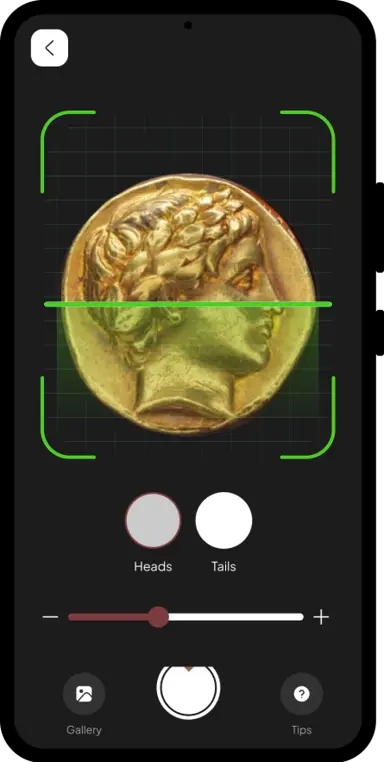
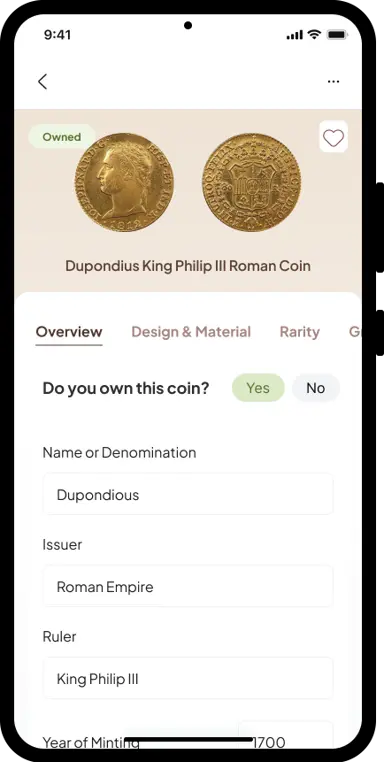
MOBILE APP
Identify coins using your camera. Your collection syncs across devices.
1M+
Daily users
4.3+★
User feedback rating
1.5M+
Items cataloged
20K+
Community members



Estimated Value
Based on recent market data

$86.20
Name or Denominations
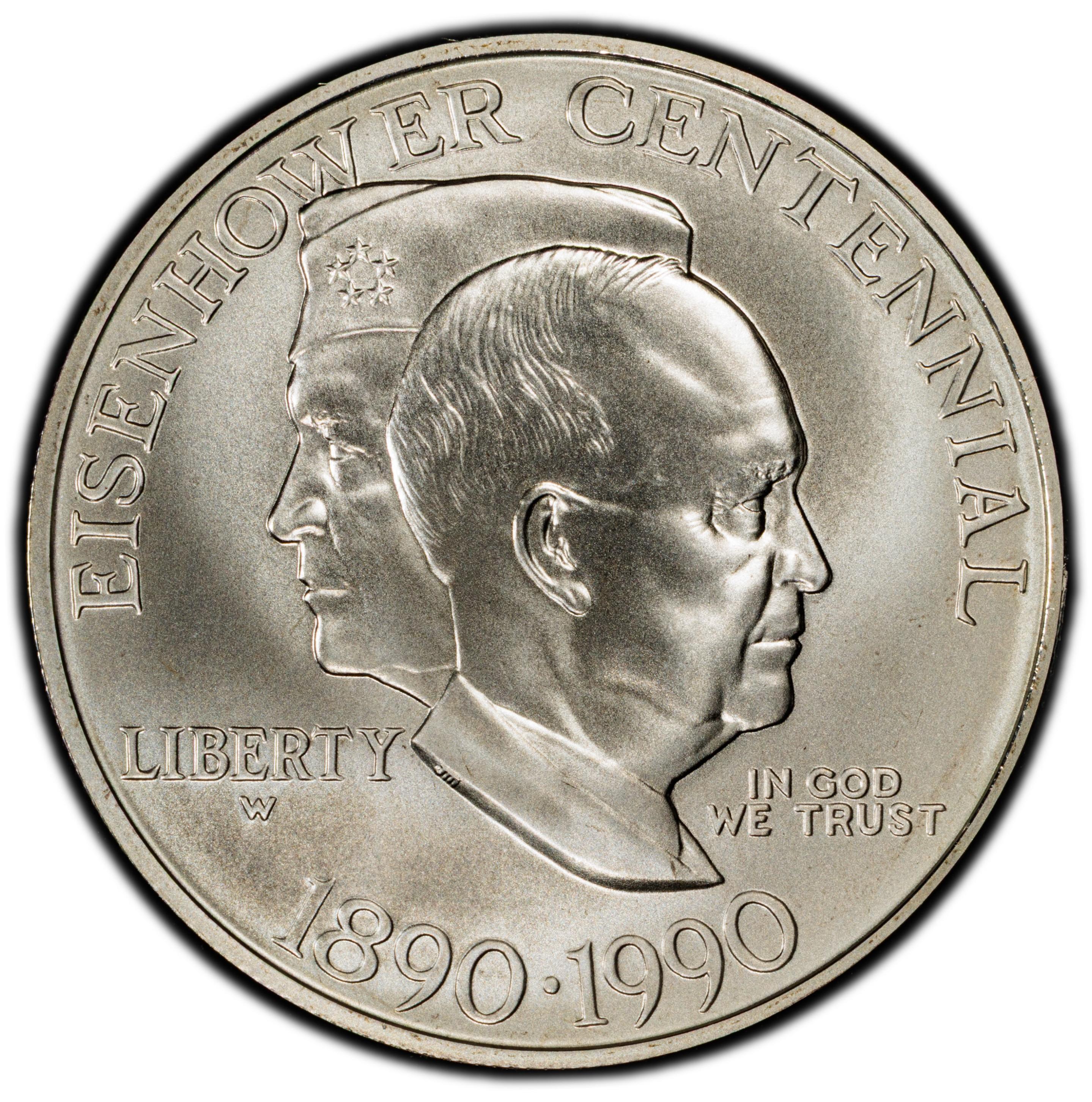
1990-W $1 Eisenhower
Issuer
United States
Ruler
NA
Year of Minting
1990
Currency
Dollar (1792-date)
Shape
Round
Rarity
Common
Weight
26.73 g
Diameter
38.1 mm
Thickness
NA
Material
90% Silver, 10% Copper
Shape
Round
Edge Type
Reeded
Technique
Struck
Front design
Janiform portraits of Eisenhower, facing left as Supreme Allied Commander and facing right as President.
Back design
The Eisenhower Home in Gettysburg, Pennsylvania.
Year of Minting
1990
Ruler
NA
Mint location
West Point
Mint mark
W
Orientation
Coin alignment
Inscriptions
In God We Trust, Liberty, United States of America, One Dollar, E Pluribus Unum.
Context
: 1990 Eisenhower Centennial Commemorative Silver Dollar The 1990 Eisenhower Centennial Silver Dollar (1990-W Unc. #9638, 1990-P Proof #9639 ) marked the second United States coin to honor Dwight D. Eisenhower , the nation's 34th President. It followed the circulating Eisenhower Dollar , which was issued from 1971 through 1978. The Obverse: Portraits in Leadership The coin’s obverse features janiform portraits of Eisenhower, representing two pivotal eras of his life. Facing left in the background is Eisenhower as Supreme Allied Commander . He is depicted wearing a garrison cap adorned with five stars. Eisenhower was one of seven officers promoted to five-star rank in December 1944. This ascent to the military’s highest grade was a dramatic "about-face" for the West Point graduate, who had previously spent 16 years stalled at the rank of major. When the United States entered World War II , Eisenhower was a one-star brigadier general. He earned his second star while working under Army Chief of Staff George Marshall in Washington, D.C ., where he drafted the Army’s basic strategy for the European theater . Marshall promoted Eisenhower to major general in March 1942 to align his rank with these significant strategic responsibilities. Eisenhower was subsequently promoted to lieutenant general in July 1942, upon being sent to London to command all U.S. forces in Europe. In February 1943, he achieved the rank of four-star general and was named Supreme Commander of Allied Forces in North Africa . Throughout this journey, Eisenhower proved his mastery of planning, strategy, organization, and international leadership. Facing right in the foreground is the presidential portrait of Eisenhower. When he took office in 1953, the Korean War was locked in a bloody stalemate. The former general campaigned on a promise to bring the conflict to an end, successfully securing an armistice within the first year of his presidency. The Reverse: The Gettysburg Estate The reverse depicts the Eisenhower Home in Gettysburg, Pennsylvania . Located adjacent to the historic battlefield, the estate served as a vital respite for the President and First Lady during his administration. After a lifetime of military assignments and constant relocation, it was the first home the Eisenhowers felt was truly theirs. They donated the site to the National Park Service in 1967. Legislative History and Production Authorized by Public Law 100-467 (October 3, 1988), the coin celebrated the 100th anniversary of Eisenhower’s birth. The Act permitted a maximum mintage of four million coins, a high figure typical of the early modern commemorative era, and mandated the use of silver from the U.S. Strategic Materials Stockpile. Despite the ambitious ceiling, the issue did not sell out; only 1.38 million coins (approximately 34.6% of the maximum) were sold. Launch and Designations The coin was officially launched on January 16, 1990, at Eisenhower’s residence in Gettysburg, Pennsylvania. During the ceremony, Mint Director Donna Pope presented the coin to U.S. Treasurer Catalina Villalpando and Congressman William F. Goodling , who had sponsored the authorizing legislation ( H.R. 3654 ). The Centennial Dollar was produced in two finishes: Uncirculated: Struck at the West Point Mint . Notably, this was the first silver dollar-sized issue to bear the “W” mintmark , a fitting tribute as Eisenhower graduated from the U.S. Military Academy at West Point in 1915 (the legendary "Class The Stars Fell On). Proof: Struck at the Philadelphia Mint . Pricing and Availability The Mint utilized tiered pricing for the individual coins, offering a pre-sale discount before moving to a regular retail price. The Uncirculated version was offered at a pre-sale price of $23 before increasing to $26 . For the Proof, the pre-sale price was set at $25 , with the regular price at $29 . Additionally, the Proof version was featured in the 1990 Prestige Proof Set , which carried a pre-sale price of $42 and a regular price of $46 . This set bundled the Eisenhower commemorative with Proof examples of the year’s standard circulating denominations. Coins housed in Prestige Proof Sets are more prone to toning or tarnishing due to the set's packaging materials. Both the individual coins and the Prestige Set remained available through the end of 1990. * * *
Rarity
Common
Coin type
Modern Silver and Clad Commemoratives (1982 to Date)
In circulation
NA
Demonetized
No
Marketplace listings
0

Subscribe to Premium
Unlock more coin details with Premium.