
Ancient Roman coins
14k+ coins · up to $50,000
Browse Catalogue
Explore popular collecting categories, from ancient Roman to rare American.


Want to check your coins value? Get it evaluated first, then list to verified buyers.

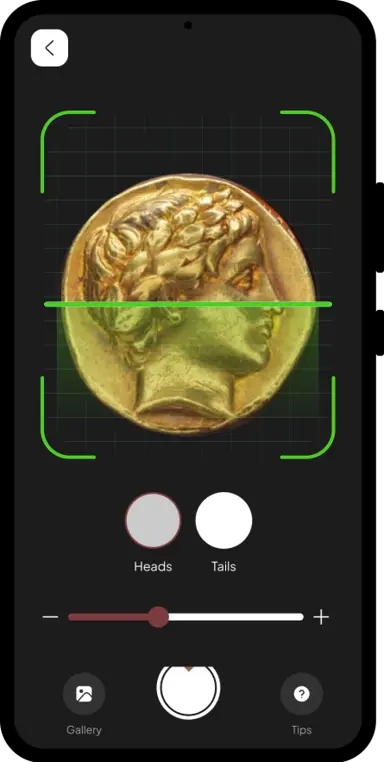
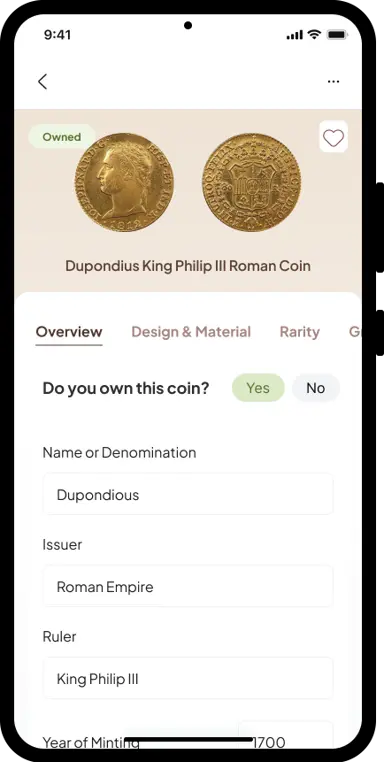
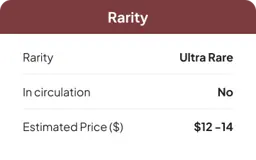
MOBILE APP
Identify coins using your camera. Your collection syncs across devices.
1M+
Daily users
4.3+★
User feedback rating
1.5M+
Items cataloged
20K+
Community members


Estimated Value
Based on recent market data

$10,857.14
Name or Denominations
U.S. Colonial Issues - 1796 AR Medal Castorland, Original
Issuer
United States
Ruler
NA
Year of Minting
1796
Currency
Dollar (1792-date)
Shape
Round
Rarity
Rare
Weight
NA
Diameter
NA
Thickness
NA
Material
Silver
Shape
Round
Edge Type
Reeded
Technique
Struck
Front design
A beaver gnawing on a tree trunk, with a river and a distant settlement in the background.
Back design
A woman holding a cornucopia, with a ship in the background and the inscription "CASTORLAND" above.
Year of Minting
1796
Ruler
NA
Mint location
Philadelphia
Mint mark
NA
Orientation
Coin alignment
Inscriptions
CASTORLAND
Context
: 1796 Castorland Jetons were given to board members of the company that oversaw a French colony in New York State known as Castorland. The name of the coin derived from the beaver laying at the base of the reverse (no, it is not a dog) -- "castor" was the French word for beaver, an important source of income for early settlers of the region. Castorland Jetons are classified as Originals and Restrikes, though there is some shading of these terms, as it appears the coins given to board members were struck over several years. The "purest" Originals will have no rust at the handle on the right side of the reverse, nor will they have even the faintest whisper of a crack at the S of PARENS. Later states begin to rust at the pot handle, then begin to crack at the S. Eventually, the crack leads to wide and extensive sinking of the die in the right reverse field. Where to place the line between Original and Restrikes is problematic, but PCGS recognizes both non-rusted and rusted examples as Originals. Any coins with a crack at PARENS are considered a Restrike. Castorland Jetons were restruck in silver, copper, and gold. Planchets range from very thin to very thick. The edges of the Originals are always reeded; restrikes come with either plain or reeded edges. Restrikes will have an edge hallmark and/or a word signalling the metal composition ("Argent" for silver or "Cuivre" for copper). Curiously, the edge markings are almost always positioned perfectly on the edge below the beaver. The Paris Mint still produces Castorland Jetons for collectors, but their style and finish is completely different from that of the Originals. Silver Originals are among the most underrated of all American "Colonials," primarily because of the lack of informaiton concerning them.
Rarity
Rare
Coin type
Post-1776 Private and Regional Issues (1778-1820)
In circulation
NA
Demonetized
No
Marketplace listings
0

Subscribe to Premium
Unlock more coin details with Premium.