
Ancient Roman coins
14k+ coins · up to $50,000
Browse Catalogue
Explore popular collecting categories, from ancient Roman to rare American.


Want to check your coins value? Get it evaluated first, then list to verified buyers.

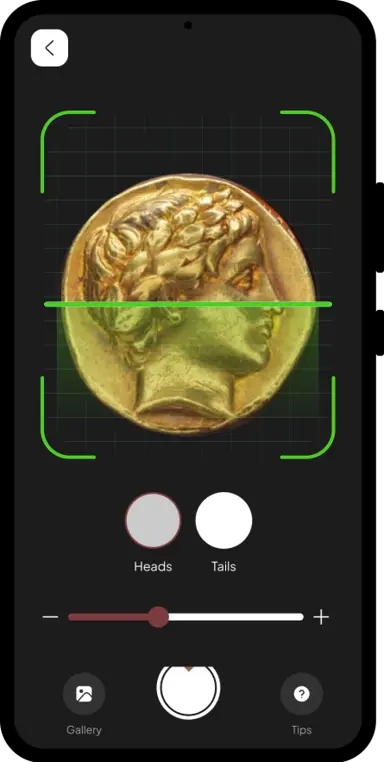
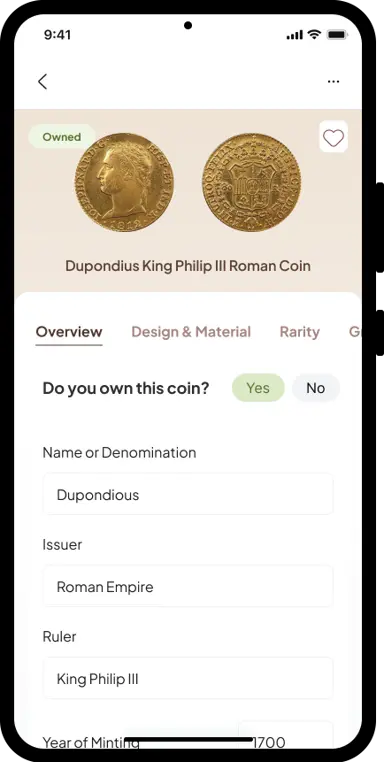
MOBILE APP
Identify coins using your camera. Your collection syncs across devices.
1M+
Daily users
4.3+★
User feedback rating
1.5M+
Items cataloged
20K+
Community members


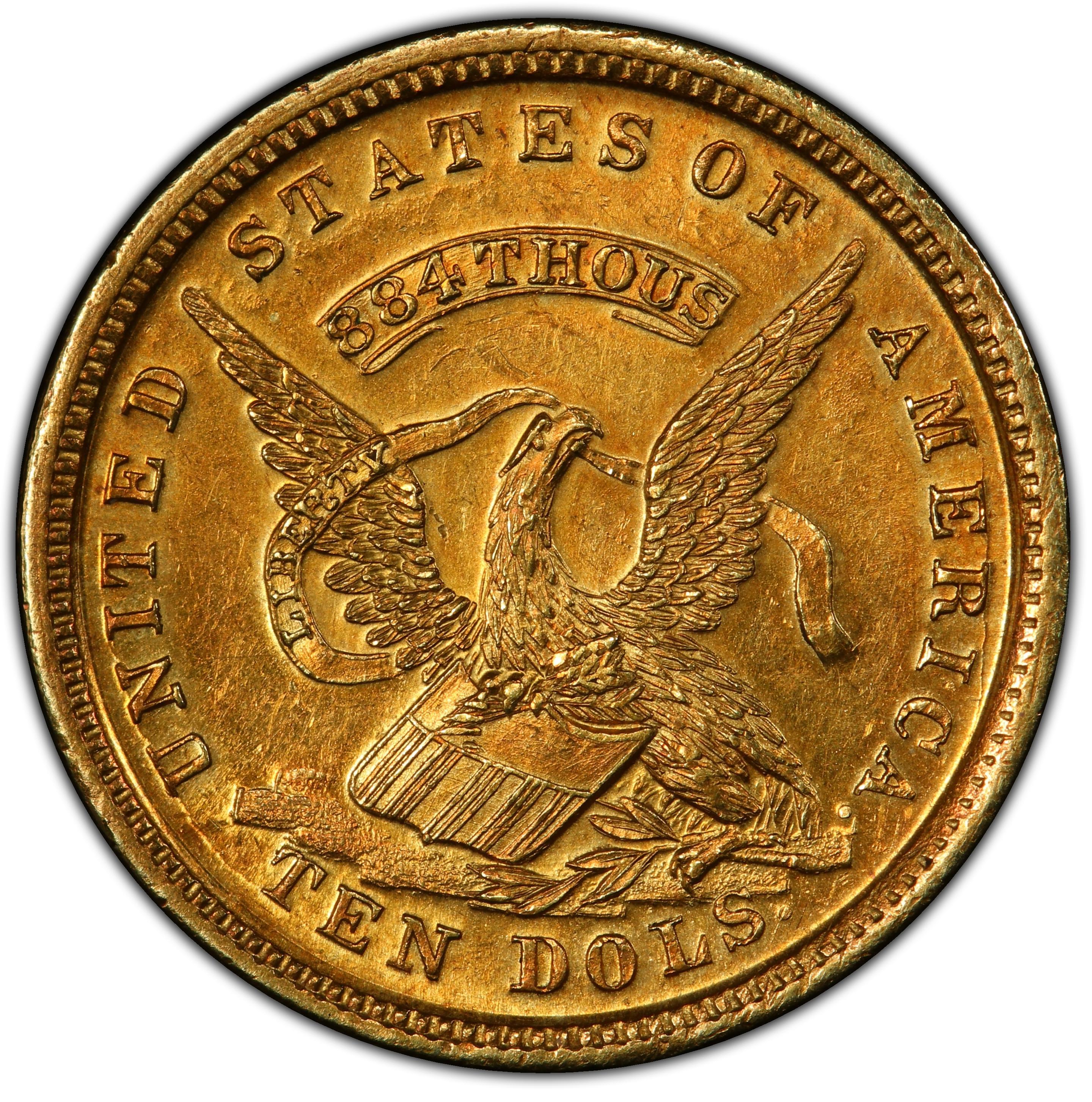

Estimated Value
Based on recent market data

$18,125
Name or Denominations
1852 $10 U.S. Assay Office
Issuer
United States
Ruler
NA
Year of Minting
1852
Currency
Dollar (1792-date)
Shape
Round
Rarity
Rare
Weight
16.72 g
Diameter
33 mm
Thickness
NA
Material
Gold
Shape
Round
Edge Type
Reeded
Technique
Struck
Front design
United States Assay Office of Gold
Back design
Eagle with shield, denomination, and fineness
Year of Minting
1852
Ruler
NA
Mint location
Philadelphia
Mint mark
NA
Orientation
Coin alignment
Inscriptions
UNITED STATES OF AMERICA | 10 DOLLARS | 1852 | AU
Context
: In 1852, the U.S. Assay Office of Gold was reorganized following the departure of John Little Moffatt and the succession of Mssrs. Curtis, Perry, and Ward. The reorganization resulted in minor changes to the coinage, primarily in the substitution of the title "United States Assay Office of Gold" in place of Augustus Humbert's name. In 1852, the U.S. Assay Office of Gold issued $10 and $50 coins under their name. The $10 editions are fairly scarce and come in two versions, each related to the positioning of the legends on the reverse. On the more common version, the O of OFFICE is under the N of UNITED. On the more rare variety, the O of OFFICE is under the I of UNITED. Mint State examples of the 1852 U.S. Assay Office of Gold $10s are very rare, and they are usually low-grade Uncs. Only one or two Choice examples are known, one of which is the NGC MS63 from the Eric Newman Collection.
Rarity
Rare
Coin type
California Gold (1849-1855)
In circulation
NA
Demonetized
No
Marketplace listings
0

Subscribe to Premium
Unlock more coin details with Premium.